
Electric Truck Axle Configurations Explained
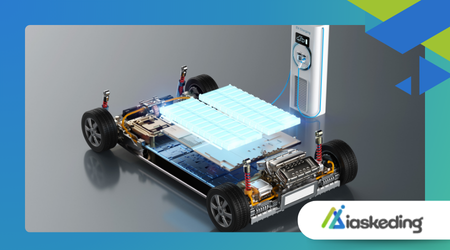
The freight industry’s electric revolution isn’t just about batteries – it’s being reshaped by electric truck axle configurations, the unsung heroes determining everything from energy efficiency to mountain-grade climbing power.
Unlike their diesel counterparts where axles merely transfer power, these intelligent systems actively manage torque distribution, regenerative braking, and even predictive energy recovery based on terrain.
Recent advancements prove these aren’t incremental changes: the global electric heavy-duty market is projected to grow 800% by 2030 (BloombergNEF), with axle design being the decisive factor in this seismic shift.
Why does this matter? Because electric truck axle configurations influence everything from energy consumption to maintenance costs.
A poorly designed system can drain batteries prematurely, while an optimized setup maximizes range and payload capacity.
The North American Council for Freight Efficiency (NACFE) reports that trucks with dual-motor axles achieve up to 12% better energy recovery in stop-and-go traffic compared to single-motor setups.
But efficiency isn’t the only factor—durability, terrain adaptability, and even regulatory compliance play crucial roles.
So, how do these systems actually work? What are the trade-offs between different designs? And which configurations will dominate the next decade?
Why Axle Configurations Are the Backbone of Electric Trucks
Electric trucks don’t just swap diesel engines for batteries—they reimagine the entire drivetrain. Traditional trucks rely on a single power source (the engine) transmitting force through a mechanical driveshaft.
Electric trucks, however, can place motors directly on the axles, or even on individual wheels.
This shift eliminates parasitic losses from gearboxes and differentials, boosting efficiency. But it also introduces new challenges.
Heat dissipation, motor synchronization, and weight distribution become critical engineering hurdles.
Take the Tesla Semi, for example. Its tri-motor setup (one on the front axle, two on the rear) ensures optimal power delivery whether fully loaded or empty.
Meanwhile, Volvo’s FH Electric uses a dual-motor tandem axle, prioritizing torque for steep inclines.
++Electric Motorcycle Maintenance: What You Need to Know
The right electric truck axle configuration depends on the truck’s purpose. Urban delivery vans benefit from single-axle simplicity, while long-haul rigs need the redundancy of multiple driven axles.
Regenerative braking further complicates the equation. Axles with integrated motors recover more energy, but only if the system can handle rapid charge-discharge cycles without overheating.
Single Axle (4×2) – The Urban Workhorse
For last-mile delivery and light-duty applications, single-axle electric trucks dominate. These setups, often labeled 4×2 (four wheels total, two driven), prioritize cost-efficiency and maneuverability.
Companies like BrightDrop (GM’s electric delivery division) use single-motor axles in their Zevo 600 vans. Why?
Because urban routes involve frequent stops, where regenerative braking recaptures significant energy. A single motor reduces weight and complexity, making maintenance easier for fleets.
However, there’s a trade-off. Single-axle trucks struggle with heavy payloads or slippery conditions. Ice, snow, or steep grades demand additional traction that a lone driven axle can’t provide.
Some manufacturers mitigate this with electronic traction control, but physics remains a limiting factor.
That’s why single-axle designs excel in predictable environments—think Amazon’s delivery vans navigating city streets—but falter in off-road or extreme-weather scenarios.
++The Economics of Electric Trucks
Looking ahead, advances in motor power density may allow single-axle trucks to handle heavier loads. But for now, they remain best suited for controlled, urban logistics.
Tandem Axle (6×4) – Power Meets Endurance

When payloads exceed 40,000 lbs or routes include steep grades, tandem axle (6×4) configurations take over. These systems drive two axles (typically the rear pair), distributing torque for better traction and reduced tire wear.
The Freightliner eCascadia, a leader in electric Class 8 trucks, uses this setup. Its dual-motor tandem axle ensures consistent power delivery, even under maximum load.
This is crucial for long-haul trucking, where energy efficiency directly impacts profitability.
But tandem axles aren’t just about raw power. They also improve braking performance. With two driven axles, regenerative braking forces spread more evenly, reducing wear on brake pads.
Some models even allow dynamic torque shifting, where power moves between axles based on real-time grip conditions.
++Electric trucks in cold climates: How temperature affects performance and range
The downside? Added weight and cost. More motors mean higher upfront expenses and slightly reduced range due to increased mass.
Still, for freight companies running cross-country routes, the trade-off is often worth it.
Independent Axle Motors – The Cutting Edge
The most advanced electric truck axle configurations ditch shared axles entirely. Instead, each wheel gets its own motor, enabling torque vectoring—a game-changer for stability and efficiency.
Rivian’s R1T pickup demonstrates this brilliantly. Its quad-motor system can send different power levels to each wheel, allowing unmatched off-road control.
Imagine crawling over rocks: one wheel lifts, but the others compensate instantly, preventing slippage.
For heavy trucks, this precision translates to safer highway handling. Independent motors can counteract trailer sway, a major cause of accidents in conventional rigs.
Volvo’s upcoming VNR Electric is testing this approach for semi-autonomous platooning.
The catch? Complexity. More motors mean more potential failure points and higher servicing costs. Thermal management also becomes critical—overheating one motor can destabilize the entire system.
Yet, as software improves, independent axle setups may become the gold standard. The ability to dynamically disable motors during cruising (to save energy) makes them uniquely versatile.
Battery Integration: The Silent Dictator of Axle Design
Axles don’t operate in isolation—their placement directly impacts battery layout. Centralized battery packs (like Tesla’s structural battery) work best with single or tandem axles, keeping weight low and balanced.
But some manufacturers, like BYD, opt for distributed battery modules along the frame. This allows finer weight distribution, crucial for dump trucks or cement mixers with shifting loads.
The challenge? Cooling. Batteries near axles face more vibration and heat from motors. Liquid-cooled systems help, but they add bulk.
Future designs may integrate phase-change materials to passively regulate temperature.
The Road Ahead: Solid-State Batteries & Megawatt Charging
By 2030, solid-state batteries could shrink pack sizes by 50%, enabling lighter axle configurations. Meanwhile, megawatt charging (MCS) will demand liquid-cooled cables and reinforced axle-side connectors to handle extreme currents.
Will we see standardized modular axles, swappable between brands? Possibly. The CharIN alliance is already pushing for universal charging interfaces—could axle compatibility be next?
Key Takeaways
- Single axles (4×2) rule urban logistics but lack heavy-duty capability.
- Tandem axles (6×4) dominate long-haul freight, balancing power and efficiency.
- Independent motors offer precision control but at higher complexity.
- Battery placement must complement axle loads to avoid inefficiencies.
For deeper dives, explore NACFE’s 2025 Electric Truck Report and Volvo’s Axle Tech Breakdown.
Frequently Asked Questions
Q: Can existing diesel trucks be retrofitted with electric axles?
A: Yes, companies like Hyliion offer conversion kits, but weight distribution often requires chassis modifications.
Q: Do more axles always mean better range?
A: Not necessarily. Additional motors increase energy use; optimal setups depend on load and terrain.
Q: How long do electric truck axles last compared to diesel?
A: With fewer moving parts, electric axles often exceed 1 million miles before major servicing.
Q: Are there any hydrogen trucks using similar axle tech?
A: Yes, Nikola’s Tre FCEV uses electric axles powered by a fuel cell, blending both technologies.
