
The Future of Freight: How Electric Trucks Are Revolutionizing the Logistics Industry
The Future of Freight: the logistics industry stands at the precipice of a transformative era, driven by the rapid adoption of electric trucks.
As the world grapples with climate change and the urgent need for sustainable solutions, the freight sector is undergoing a seismic shift.
“The Future of Freight” is no longer a distant concept but a tangible reality, with electric trucks leading the charge.
This article delves into how these innovative vehicles are reshaping logistics, offering a cleaner, more efficient, and economically viable alternative to traditional diesel-powered trucks.
The Environmental Imperative: Why Electric Trucks Are Essential

The transportation sector is one of the largest contributors to global greenhouse gas emissions, with freight trucks accounting for a significant portion.
According to the International Energy Agency (IEA), heavy-duty trucks are responsible for nearly 40% of CO2 emissions from road transport.
This staggering figure underscores the urgent need for sustainable alternatives.
Electric trucks, powered by renewable energy sources, offer a promising solution to this environmental crisis.
Moreover, the adoption of electric trucks aligns with global climate goals, such as the Paris Agreement, which aims to limit global warming to well below 2 degrees Celsius.
By transitioning to electric vehicles (EVs), the logistics industry can significantly reduce its carbon footprint.
For instance, a study by the Union of Concerned Scientists found that electric trucks produce 50% fewer emissions over their lifetime compared to diesel trucks, even when accounting for the electricity generation process.
In addition to reducing emissions, electric trucks also contribute to improved air quality.
Diesel trucks emit harmful pollutants such as nitrogen oxides (NOx) and particulate matter (PM), which have severe health implications.
Electric trucks, on the other hand, produce zero tailpipe emissions, leading to cleaner air in urban areas and along major freight corridors.
This environmental benefit is particularly crucial in densely populated regions where air pollution is a pressing public health concern.
Economic Viability: The Cost-Effectiveness of Electric Trucks
While the environmental benefits of electric trucks are clear, their economic viability has often been questioned.
However, recent advancements in battery technology and declining costs are making electric trucks increasingly cost-competitive with their diesel counterparts.
According to BloombergNEF, the cost of lithium-ion batteries has fallen by 89% over the past decade, and this trend is expected to continue.
Furthermore, electric trucks offer significant savings in operational costs.
Diesel trucks are notorious for their high fuel and maintenance expenses, which can account for a substantial portion of a logistics company’s budget. Electric trucks, by contrast, have fewer moving parts, resulting in lower maintenance costs.
Additionally, the cost of electricity is generally more stable and predictable than diesel prices, providing companies with greater financial certainty.
Governments and private sectors are also incentivizing the adoption of electric trucks through subsidies, tax breaks, and grants. For example, the U.S.
Inflation Reduction Act includes provisions for tax credits for commercial electric vehicles, making them more accessible to logistics companies.
These financial incentives, coupled with the long-term cost savings, make electric trucks an economically attractive option for the future of freight.
++ Hydrogen or battery electric: which is the best bet for the future?
Technological Advancements: Driving the Electric Truck Revolution
The rapid pace of technological innovation is a key driver behind the rise of electric trucks.
Advances in battery technology, such as the development of solid-state batteries, are extending the range and reducing the charging time of electric trucks.
Companies like Tesla, Rivian, and Nikola are at the forefront of this revolution, introducing electric trucks with ranges exceeding 300 miles on a single charge.
Moreover, the integration of autonomous driving technology is further enhancing the efficiency and safety of electric trucks.
Autonomous electric trucks can operate around the clock without the need for rest breaks, significantly increasing productivity.
Companies like TuSimple and Embark are already testing autonomous electric trucks on public roads, with promising results.
This combination of electrification and automation is poised to redefine the logistics industry.
Another critical technological advancement is the development of smart charging infrastructure.
Unlike traditional fueling stations, smart charging networks can optimize charging schedules based on electricity demand and grid capacity.
This not only reduces the strain on the electrical grid but also lowers charging costs for logistics companies.
Companies like ChargePoint and Electrify America are leading the charge in building robust charging networks tailored to the needs of electric trucks.
Regulatory Landscape: Policies Shaping the Future of Freight
Government policies play a pivotal role in accelerating the adoption of electric trucks. In recent years, several countries have announced ambitious targets to phase out internal combustion engine (ICE) vehicles.
For instance, the European Union has proposed a ban on the sale of new diesel and gasoline trucks by 2040. Similarly, California has set a goal for all new trucks sold in the state to be zero-emission by 2045.
In addition to phase-out targets, governments are implementing stricter emissions standards for heavy-duty vehicles. The U.S.
Environmental Protection Agency (EPA) has introduced new regulations that require a 25% reduction in greenhouse gas emissions from trucks by 2027.
These regulations are pushing manufacturers to invest in electric truck technology and accelerate their transition to zero-emission vehicles.
Furthermore, public-private partnerships are emerging as a powerful tool to drive the adoption of electric trucks.
For example, the European Clean Trucking Alliance brings together logistics companies, manufacturers, and policymakers to promote the deployment of electric trucks.
These collaborative efforts are essential for creating a supportive ecosystem that enables the widespread adoption of electric trucks.
Challenges and Opportunities: Navigating the Road Ahead
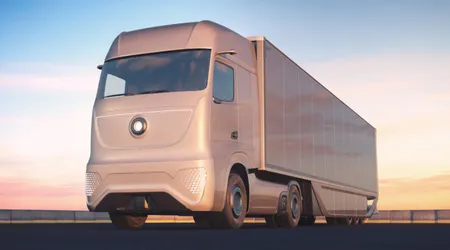
Despite the numerous benefits, the transition to electric trucks is not without challenges.
One of the primary obstacles is the limited availability of charging infrastructure, particularly for long-haul routes.
Building a comprehensive charging network requires significant investment and coordination among stakeholders.
However, this challenge also presents an opportunity for innovation and collaboration.
Companies like Shell and BP are investing in charging infrastructure, recognizing the growing demand for electric trucks.
Another challenge is the current limitations in battery technology, particularly in terms of energy density and charging speed.
While advancements are being made, further research and development are needed to overcome these limitations.
Governments and private sectors must continue to invest in R&D to drive innovation and bring down costs.
Moreover, the transition to electric trucks requires a skilled workforce capable of maintaining and operating these advanced vehicles.
Training programs and educational initiatives are essential to equip workers with the necessary skills.
This presents an opportunity for job creation and economic growth, as the demand for skilled technicians and engineers in the electric vehicle sector continues to rise.
The Role of Data and Connectivity: Enhancing Efficiency
In the era of digital transformation, data and connectivity are becoming increasingly important in the logistics industry.
Electric trucks, equipped with advanced telematics systems, can collect and transmit vast amounts of data in real-time.
This data can be used to optimize routes, monitor vehicle performance, and predict maintenance needs, leading to greater efficiency and cost savings.
Furthermore, the integration of Internet of Things (IoT) technology enables seamless communication between electric trucks and other vehicles, as well as with infrastructure such as charging stations.
This connectivity enhances safety and coordination, reducing the risk of accidents and improving overall fleet management.
Companies like Daimler and Volvo are leveraging IoT technology to create smarter, more efficient logistics networks.
Additionally, data analytics and artificial intelligence (AI) are playing a crucial role in optimizing the operation of electric trucks.
AI algorithms can analyze historical data to predict demand patterns and optimize delivery schedules.
This not only reduces operational costs but also enhances customer satisfaction by ensuring timely deliveries.
The combination of data, connectivity, and AI is transforming the logistics industry, making it more efficient and responsive to changing market dynamics.
++ Does an electric motorcycle offer risks? the impact of this technology on security
The Global Perspective: Electric Trucks Around the World
The adoption of electric trucks is not limited to a single region; it is a global phenomenon.
In Europe, countries like Norway and Germany are leading the way, with significant investments in electric truck infrastructure and incentives for adoption.
Norway, in particular, has set an ambitious target for all new heavy-duty vehicles to be zero-emission by 2030.
In North America, the United States and Canada are also making strides in the adoption of electric trucks.
California, as mentioned earlier, is at the forefront, with several pilot projects and initiatives aimed at promoting electric trucks. Similarly, Canada has introduced incentives for the purchase of electric trucks and is investing in charging infrastructure.
In Asia, China is emerging as a global leader in electric truck adoption.
The Chinese government has implemented aggressive policies to promote electric vehicles, including subsidies and mandates for electric truck adoption in major cities.
Companies like BYD and SAIC are producing electric trucks at scale, catering to both domestic and international markets.
The Future of Freight: A Sustainable and Efficient Logistics Industry
The future of freight is undeniably electric.
As the logistics industry embraces electric trucks, it is poised to become more sustainable, efficient, and economically viable.
The environmental benefits, coupled with advancements in technology and supportive policies, are driving the rapid adoption of electric trucks.
While challenges remain, the opportunities for innovation and growth are immense.
The transition to electric trucks is not just a technological shift; it is a fundamental transformation of the logistics industry.
By reducing emissions, lowering operational costs, and enhancing efficiency, electric trucks are revolutionizing the way goods are transported.
As we look to the future, it is clear that electric trucks will play a central role in creating a more sustainable and resilient logistics industry.
Conclusion: Embracing the Electric Revolution
The future of freight is here, and it is electric. Electric trucks are revolutionizing the logistics industry, offering a cleaner, more efficient, and economically viable alternative to traditional diesel trucks.
From reducing emissions and improving air quality to lowering operational costs and enhancing efficiency, the benefits of electric trucks are undeniable.
As the world continues to grapple with the challenges of climate change and the need for sustainable solutions, the adoption of electric trucks is not just a choice but a necessity.
Governments, businesses, and consumers must work together to accelerate this transition and create a more sustainable future for freight.
The road ahead may be challenging, but the opportunities for innovation and growth are immense.
By embracing the electric revolution, the logistics industry can pave the way for a cleaner, greener, and more efficient future.
The future of freight is electric, and it is brighter than ever.
Table 1: Comparison of Electric Trucks vs. Diesel Trucks
| Aspect | Electric Trucks | Diesel Trucks |
|---|---|---|
| Emissions | Zero tailpipe emissions | High CO2 and NOx emissions |
| Operational Costs | Lower fuel and maintenance costs | High fuel and maintenance costs |
| Range | Up to 300 miles on a single charge | 600-1,000 miles on a full tank |
| Charging/Refueling | Requires charging infrastructure | Widely available fueling stations |
| Incentives | Subsidies, tax breaks, and grants | Limited incentives |
Table 2: Global Adoption of Electric Trucks
| Region | Key Players | Policies and Initiatives |
|---|---|---|
| Europe | Norway, Germany | EU ban on new diesel trucks by 2040 |
| North America | United States, Canada | California’s zero-emission truck mandate by 2045 |
| Asia | China | Subsidies and mandates for electric truck adoption |
Table 3: Technological Advancements in Electric Trucks
| Technology | Impact |
|---|---|
| Solid-State Batteries | Increased range and reduced charging time |
| Autonomous Driving | Enhanced efficiency and safety |
| Smart Charging | Optimized charging schedules and reduced grid strain |
| IoT and AI | Improved fleet management and operational efficiency |
In conclusion, “The Future of Freight” is being shaped by the rapid adoption of electric trucks.
These vehicles are not only addressing the environmental challenges posed by traditional diesel trucks but are also offering significant economic and operational benefits.
As technology continues to advance and supportive policies are implemented, the logistics industry is on the brink of a sustainable and efficient future.
The electric revolution is here, and it is transforming the way we think about freight.
