
Electric Motorcycle Conversions: Turning Gas Bikes into Electric Rides
Imagine cruising down the street on your beloved motorcycle, but with a twist – it’s now powered by electricity. Gas to electric motorcycle conversion is taking the riding world by storm. This eco-friendly trend is transforming how we think about two-wheeled transportation.
Riders are discovering the joys of sustainable riding while keeping their favorite bikes. By swapping out gas engines for electric motors, they’re creating unique, eco-friendly bikes that turn heads and reduce carbon footprints. It’s a win-win for both the environment and motorcycle enthusiasts.
Ready to dive into the world of electric motorcycle conversions? Let’s explore how you can join this green revolution and give your gas guzzler a new lease on life as an electric dream machine.
Understanding the Basics of Electric Motorcycle Conversion
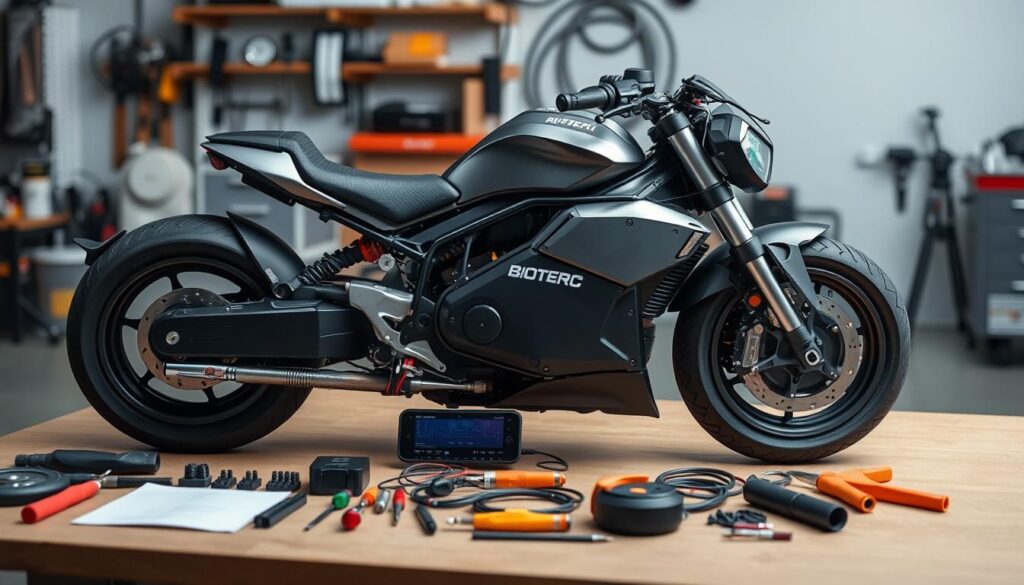
Electric motorcycle conversion transforms gas-powered bikes into eco-friendly rides. The process involves replacing the internal combustion engine with an electric drivetrain. At the heart of this transformation are key electric motorcycle components that work together to power the bike.
The main parts of an electric motorcycle include:
- Electric motor
- Battery pack
- Controller
- Charger
The electric motor serves as the powerhouse, converting electrical energy into mechanical motion. Battery packs store the energy needed to run the motor. Controllers regulate power flow between the battery and motor, while chargers replenish the batteries.
EV bike technology has advanced significantly, offering improved range and performance. Modern lithium-ion batteries provide longer rides, and brushless motors deliver smooth, efficient power. Conversion fundamentals involve careful planning and integration of these components.
“Converting a motorcycle to electric power is like giving it a new lease on life. It’s a blend of engineering and creativity.”
Understanding these basics is crucial for a successful conversion. It sets the foundation for selecting the right components and planning the installation process. With proper knowledge, enthusiasts can embark on their electric motorcycle conversion journey with confidence.
Converting Gas Motorcycle to Electric: Step-by-Step Process
Embarking on a DIY electric motorcycle conversion project can be thrilling. The gas to electric bike conversion steps require careful planning and execution. Let’s dive into the EV motorcycle build process.
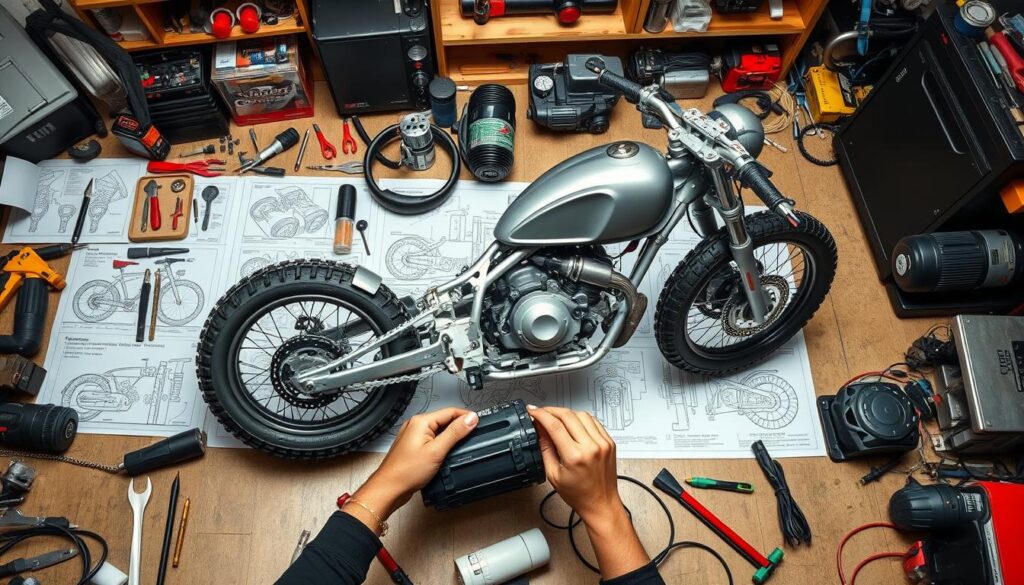
Start by removing the gas engine and fuel system. This step frees up space for the electric components. Next, install the electric motor. Choose a motor that matches your performance goals and fits your bike’s frame.
The battery pack is crucial for your EV motorcycle build. Mount it securely, ensuring weight distribution doesn’t affect handling. Install the controller, which regulates power flow between the battery and motor.
Wiring is a critical part of the gas to electric bike conversion steps. Create a detailed wiring diagram before connecting components. Use high-quality cables and connectors to ensure safety and efficiency.
| Component | Function | Installation Tips |
|---|---|---|
| Electric Motor | Provides propulsion | Align properly with drive system |
| Battery Pack | Stores energy | Secure mounting, balance weight |
| Controller | Manages power flow | Place for easy access, cooling |
| Wiring | Connects components | Use appropriate gauge, protect from elements |
Integrate the new electric system with the existing motorcycle frame. This may require custom brackets or mounts. Test all connections before taking your newly converted electric motorcycle for a spin.
“Converting a gas motorcycle to electric is like giving your bike a second life with a clean, powerful heart.”
Remember, safety is paramount in your DIY electric motorcycle conversion. If you’re unsure about any step, consult with experts or join online EV communities for guidance.
Cost Analysis and Equipment Selection
Converting your gas motorcycle to electric can be an exciting project, but it’s crucial to understand the costs involved. The electric motorcycle conversion cost varies depending on your chosen components and performance goals. A basic conversion kit might start around $2,000, while high-end setups can exceed $10,000.
When selecting EV bike components, consider your budget and desired range. Key items include the motor, battery pack, controller, and charger. Motor prices range from $500 to $3,000, while lithium-ion battery packs can cost $2,000 to $5,000 or more. Controllers typically run $300 to $1,000, and chargers range from $200 to $800.
| Component | Low-End Price | High-End Price |
|---|---|---|
| Motor | $500 | $3,000 |
| Battery Pack | $2,000 | $5,000+ |
| Controller | $300 | $1,000 |
| Charger | $200 | $800 |
Conversion kit pricing varies based on quality and performance. Budget-friendly kits start around $3,000, while premium options can reach $15,000 or more. Remember to factor in additional costs like wiring, mounting hardware, and potential professional installation if you’re not tackling the project yourself.
“The investment in an electric motorcycle conversion often pays off in reduced fuel and maintenance costs over time.”
Carefully weigh your options and research thoroughly before making your final equipment selections. This ensures you get the best value for your money while achieving your desired performance goals.
Performance Considerations and Modifications
Converting a gas motorcycle to electric significantly impacts its performance. Electric motorcycle performance differs from traditional bikes in acceleration, top speed, and EV bike range. The instant torque of electric motors provides quick acceleration, often surpassing gas-powered counterparts.
Power output optimization is crucial for achieving desired performance levels. Upgrading the motor, controller, and battery pack can boost acceleration and top speed. A larger battery capacity extends range but adds weight, affecting handling.
Modifications to suspension, brakes, and tires are essential to accommodate the changed weight distribution. Adjusting suspension settings improves handling and ride comfort. Upgrading brake components ensures adequate stopping power for the increased weight and performance.
| Component | Modification | Performance Impact |
|---|---|---|
| Motor | Higher power rating | Increased acceleration, top speed |
| Battery | Larger capacity | Extended range, added weight |
| Suspension | Stiffer springs, adjusted damping | Improved handling, stability |
| Brakes | Larger rotors, upgraded calipers | Enhanced stopping power |
Balancing performance upgrades with weight considerations is key to optimizing electric motorcycle performance. Each modification affects the overall riding experience, requiring careful consideration to achieve the desired balance of speed, range, and handling.
Conclusion
Electric motorcycle conversions offer a compelling path to sustainable transportation. By transforming gas-powered bikes into electric rides, we can reduce our carbon footprint while enjoying the thrill of two-wheel travel. The benefits of electric motorcycle conversion extend beyond environmental impact, including lower operating costs and reduced maintenance needs.
As we look to the future of EV bikes, the technology continues to improve. Battery life is extending, charging times are decreasing, and performance is rivaling traditional motorcycles. These advancements make electric conversions an increasingly attractive option for riders seeking an eco-friendly alternative without sacrificing the joy of riding.
The shift towards sustainable transportation is gaining momentum, with electric motorcycles playing a crucial role. Whether you’re a seasoned rider or new to motorcycling, converting your gas bike to electric offers a unique opportunity to be part of this green revolution. As more riders make the switch, we move closer to a cleaner, quieter, and more sustainable future on two wheels.
FAQ
What are the main benefits of converting a gas motorcycle to electric?
How much does it typically cost to convert a gas motorcycle to electric?
What are the key components needed for an electric motorcycle conversion?
How does the performance of a converted electric motorcycle compare to its gas counterpart?
Can I do the conversion myself, or should I hire a professional?
How long does a typical gas to electric motorcycle conversion take?
What’s the average range of a converted electric motorcycle?
Are there any legal considerations when converting a motorcycle to electric?
