
Electric Cars in Extreme Climates: Performance Insights
Electric cars are changing the way we drive, but how do they handle tough weather? From icy roads to scorching heat, EV performance faces unique challenges. Let’s explore how electric vehicle technology adapts to extreme climates.
Climate adaptation is key for electric cars. As more people switch to EVs, understanding their limits in different weather becomes crucial. We’ll look at how these high-tech rides cope with nature’s mood swings.
Get ready to dive into the world of electric cars battling the elements. We’ll uncover the tricks and tweaks that keep them running smoothly, no matter what Mother Nature throws their way.
Understanding Electric Vehicle Technology in Challenging Environments
Electric vehicles face unique challenges in extreme conditions. EV components must withstand harsh temperatures while maintaining optimal performance. The heart of any electric car is its battery technology, which plays a crucial role in determining range and efficiency.
Lithium-ion batteries, the most common type used in EVs, are sensitive to temperature fluctuations. In cold weather, their chemical reactions slow down, reducing energy output. Conversely, high temperatures can cause battery degradation and shorten lifespan.
Thermal management systems are essential for keeping EV batteries within their ideal temperature range. These systems use coolants or refrigerants to regulate battery temperature, ensuring optimal performance in extreme conditions.
“Effective thermal management is key to maintaining EV performance across various climates,” says Dr. Sarah Chen, an automotive engineering expert.
Electric motors and power electronics are also affected by extreme weather. Engineers design these components to withstand temperature extremes, using specialized materials and cooling systems.
| EV Component | Cold Weather Impact | Hot Weather Impact |
|---|---|---|
| Battery | Reduced range, slower charging | Faster degradation, potential overheating |
| Motor | Increased energy consumption | Risk of overheating |
| Power Electronics | Reduced efficiency | Increased wear, potential failure |
Understanding these technological aspects is crucial for EV owners and manufacturers alike. As electric vehicles continue to evolve, advancements in battery technology and thermal management will play a vital role in improving performance across all climate conditions.
Cold Weather Impacts on Electric Cars

Winter driving presents unique challenges for electric car owners. As temperatures drop, battery efficiency takes a hit, leading to significant range reduction. This means EV drivers need to plan their trips more carefully during cold months.
Cold weather affects electric cars in several ways:
- Battery capacity decreases
- Energy consumption increases for cabin heating
- Regenerative braking becomes less effective
These factors combine to reduce an electric vehicle’s range by up to 40% in extreme cold. To combat this, manufacturers are developing innovative solutions. Some newer models feature heat pumps, which are more efficient than traditional resistive heating systems.
Cold-weather charging can also be slower, as batteries need to be warmed before accepting a full charge. Many EVs now come with battery preconditioning features, allowing owners to warm their batteries before unplugging, improving charging speed and efficiency.
“Proper preparation is key for winter driving in an electric car. Preconditioning your battery and planning your route can make a big difference in your driving experience.”
Despite these challenges, electric cars remain a viable option for winter driving. With proper planning and the right techniques, EV owners can navigate cold climates confidently and efficiently.
Electric Cars in Extreme Weather: Performance Analysis
Electric cars face unique challenges in extreme weather conditions. Range variability becomes a significant factor as temperatures fluctuate. In arctic cold, EVs can lose up to 40% of their range due to increased energy consumption for heating the cabin and battery. Desert heat also impacts EV efficiency, causing battery degradation and increased cooling needs.
Climate-based performance varies greatly across different regions. In moderate climates, electric vehicles maintain optimal efficiency. But as temperatures deviate from the ideal range, energy consumption rises dramatically. This affects not only range but overall vehicle performance.
A comprehensive study of EV performance across climate zones reveals interesting patterns:
| Climate Zone | Range Impact | Energy Consumption | Overall Efficiency |
|---|---|---|---|
| Arctic (-20°C) | -40% | +60% | Low |
| Temperate (20°C) | 0% | Baseline | High |
| Desert (40°C) | -10% | +25% | Medium |
This data highlights the need for climate-specific EV designs to maintain consistent performance across diverse weather conditions. As manufacturers continue to innovate, we can expect improvements in EV efficiency and reduced range variability in extreme climates.
Heat Management in High-Temperature Conditions
Electric cars face unique challenges in hot climates. Battery cooling stands out as a critical factor in maintaining optimal performance during hot climate driving. Advanced thermal management systems work tirelessly to keep battery temperatures in check, preventing overheating and extending battery life.
Thermal runaway prevention is another key aspect of heat management in electric vehicles. Manufacturers implement sophisticated safety measures to detect and mitigate potential thermal events, ensuring passenger safety and vehicle reliability in extreme heat conditions.
The impact of air conditioning on electric car range cannot be overstated. In scorching temperatures, AC usage can significantly reduce driving range. To combat this, some EVs employ innovative cooling strategies:
- Pre-cooling while plugged in to reduce initial energy drain
- Smart climate control systems that optimize efficiency
- Reflective exterior paints to minimize heat absorption
For optimal performance in hot weather, EV owners should consider:
- Parking in shaded areas or using sunshades
- Charging during cooler hours to reduce strain on the battery
- Regular maintenance of cooling systems
By understanding and adapting to these heat management strategies, electric car owners can enjoy reliable performance even in the most challenging hot climate conditions.
Innovative Solutions for Climate Challenges
Electric vehicle makers are pushing boundaries with climate-adaptive EVs. These cars use advanced materials to withstand extreme temperatures. New alloys and composites improve durability in harsh conditions. Smart thermal management systems keep batteries at optimal temperatures. They use phase-change materials to absorb excess heat or cold.
AI-driven systems are revolutionizing how EVs handle climate challenges. These smart systems predict weather patterns and adjust vehicle performance. They optimize battery usage based on temperature forecasts. This ensures peak efficiency in any climate.
One exciting innovation is the use of climate-adaptive technologies in EVs. These include:
- Self-heating batteries for cold starts
- Adaptive cooling systems for hot climates
- Smart defrosting mechanisms
- Weather-responsive aerodynamics
Manufacturers are also exploring new battery chemistries. These aim to improve performance in extreme temperatures. Solid-state batteries show promise for better cold-weather operation. They may also enhance safety in high-heat environments.
| Innovation | Benefit |
|---|---|
| Advanced Materials | Improved durability |
| Smart Thermal Management | Optimal battery temperature |
| AI-Driven Systems | Adaptive performance |
| New Battery Chemistry | Better extreme weather operation |
These innovations are making EVs more resilient to climate challenges. They’re paving the way for truly all-weather electric vehicles. As technology advances, we can expect even more robust and efficient climate-adaptive EVs on our roads.
Real-World Performance Data Across Climate Zones
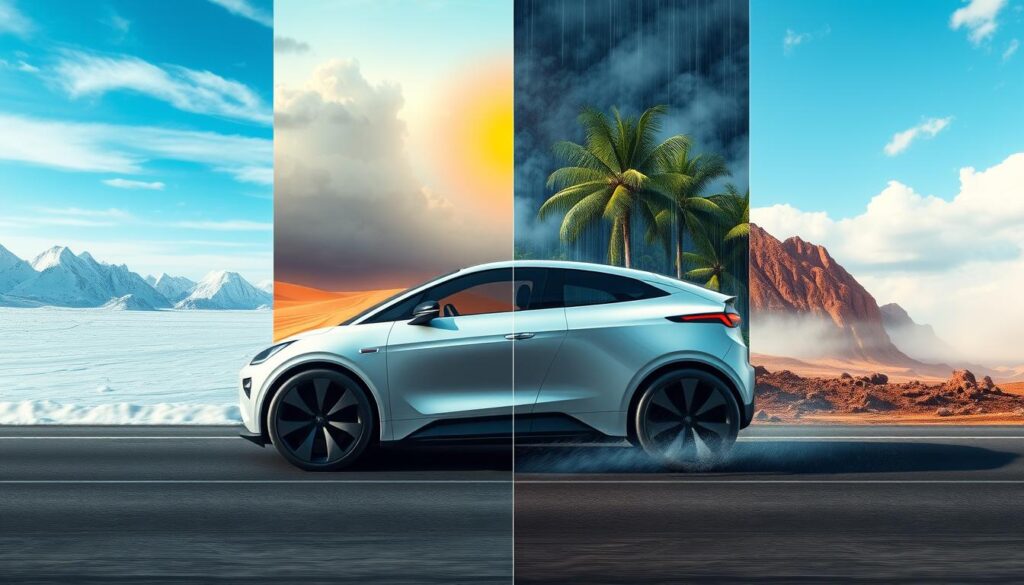
EV user experiences vary greatly across different climate zones. Regional performance variations are significant, with climate-specific data revealing interesting patterns. In colder regions, EVs often face reduced range due to increased energy consumption for heating. A study in Norway showed that EVs lost up to 30% of their range in winter conditions.
Consumer insights from warmer climates paint a different picture. In Arizona, EV owners reported minimal range loss but increased air conditioning usage. This climate impact on EV performance highlights the need for adaptive technologies.
| Climate Zone | Average Range Loss | Main Challenge |
|---|---|---|
| Arctic | 40% | Battery efficiency |
| Temperate | 10% | Seasonal variations |
| Tropical | 15% | Cooling system strain |
Real-world data shows that EV performance is not uniform across regions. In temperate zones, seasonal changes cause fluctuations in range and efficiency. Tropical areas see consistent performance year-round, with slight drops during peak heat. These insights are crucial for manufacturers and consumers alike, driving innovations in EV technology to meet diverse climate challenges.
Manufacturer-Specific Climate Adaptations
Electric vehicle makers are racing to improve performance in extreme weather. The Tesla cold weather package leads the pack with its innovative features. This package includes a heated steering wheel, heated seats, and a battery preconditioning system. These elements work together to maximize range and comfort in frigid conditions.
Nissan Leaf thermal management system takes a different approach. It uses a heat pump to warm the cabin and battery, reducing energy consumption. This clever design helps maintain range even when temperatures drop.
BMW i3 battery heating is another standout technology. The system warms the battery pack before driving, ensuring optimal performance from the start. This proactive approach helps preserve range and extends battery life in cold climates.
The Chevrolet Bolt EV winter mode is a user-friendly feature. With the push of a button, drivers can activate settings that prioritize efficiency in cold weather. This mode adjusts power distribution and climate control for improved range.
| Manufacturer | Feature | Benefit |
|---|---|---|
| Tesla | Cold Weather Package | Maximizes range and comfort |
| Nissan | Leaf Thermal Management | Reduces energy consumption |
| BMW | i3 Battery Heating | Ensures optimal performance |
| Chevrolet | Bolt EV Winter Mode | Improves efficiency in cold weather |
Conclusion
Electric cars are stepping up to the challenge of extreme weather. They’re proving their worth in both icy cold and scorching heat. The future of EVs looks bright as they become more climate resilient. Car makers are working hard to improve battery life and performance in all conditions.
Technological advancements are key to making EVs better suited for tough climates. New cooling systems help batteries stay safe in high temps. Better insulation keeps them warm when it’s freezing outside. These improvements are making electric cars a reliable choice for drivers everywhere.
As we move towards sustainable transportation, EVs are leading the way. They’re getting better at handling extreme weather, which means fewer worries for drivers. With ongoing research and development, electric cars are set to become even more adaptable and efficient in the years to come.
The road ahead for electric vehicles is exciting. As they overcome climate challenges, EVs are paving the way for a cleaner, greener future in transportation. It’s clear that electric cars are here to stay, no matter what the weather brings.
FAQ
How does extreme cold affect an electric car’s range?
Are electric cars safe to drive in extreme heat?
How does climate affect EV charging speed?
Can electric cars handle snowy or icy conditions?
How do manufacturers adapt EVs for extreme climates?
Does using air conditioning in an EV significantly reduce its range?
Are there any advantages to driving an EV in cold weather compared to gas cars?
How do EVs perform in high-altitude environments?
What innovations are being developed to improve EV performance in extreme climates?
How does regenerative braking work in icy conditions?
