
Exploring Range Extenders for Electric Trucks: A Practical Solution?
Electric trucks are changing the face of commercial transportation. As more companies seek zero-emission solutions, EV technology in the trucking industry is gaining traction. But there’s a catch – limited range. That’s where range extenders come into play.
Range extenders offer a promising fix for the distance limitations of electric trucks. These devices can potentially revolutionize how we think about long-haul transport. By addressing range anxiety, they’re opening doors to greener, more efficient commercial vehicles.
As the demand for sustainable logistics grows, so does the interest in range extenders. They’re not just add-ons; they’re game-changers in the world of zero-emission transportation. Let’s dive into how these innovative solutions are reshaping the future of electric trucks.
Understanding Range Extenders for Electric Trucks
Range extenders offer a practical solution for electric trucks facing battery range limitations. These auxiliary power units work alongside electric powertrains to boost overall driving distance. By combining hybrid technology with traditional engines, range extenders address the challenges of long-haul transportation.
Electric trucks equipped with range extenders use smaller batteries supplemented by onboard generators. This setup allows for extended trips without relying solely on charging infrastructure. The primary types of range extenders include:
- Internal combustion engines
- Fuel cells
- Regenerative braking systems
Each type integrates differently with electric powertrains, offering unique benefits for various trucking applications. Let’s compare these range extender options:
| Range Extender Type | Fuel Source | Efficiency | Environmental Impact |
|---|---|---|---|
| Internal Combustion Engine | Gasoline/Diesel | Moderate | Higher emissions |
| Fuel Cell | Hydrogen | High | Low emissions |
| Regenerative Braking | Kinetic Energy | Variable | No direct emissions |
By understanding these range extender options, fleet operators can make informed decisions to optimize their electric truck performance and reduce reliance on frequent charging stops.
“Range extenders bridge the gap between current battery limitations and the demands of long-distance trucking, paving the way for widespread electric vehicle adoption in the freight industry.”
Current Challenges in Electric Truck Transportation
Electric trucks face significant hurdles in commercial transportation. Battery limitations restrict their driving range, making long-haul logistics difficult. Fleet operators struggle with extended charging times, impacting delivery schedules and efficiency.
Range anxiety plagues drivers, especially on lengthy routes. This fear of running out of power mid-journey affects route planning and overall operational strategies. The need for frequent charging stops disrupts smooth logistics flow.
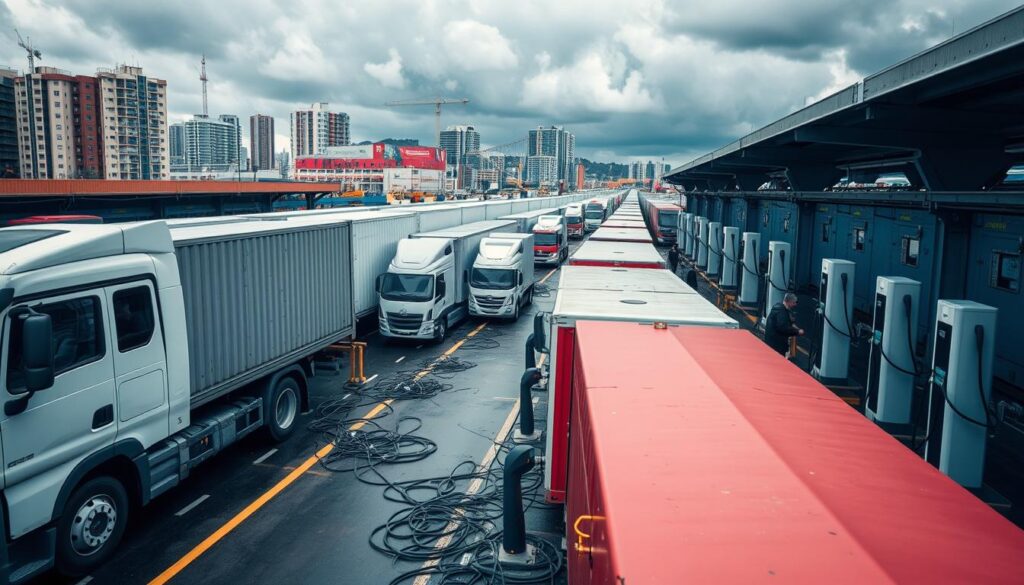
Payload capacity is another crucial concern. The weight of large battery packs reduces the amount of cargo electric trucks can carry compared to traditional diesel vehicles. This limitation affects profitability and competitiveness in the freight industry.
| Challenge | Impact on Operations |
|---|---|
| Limited Range | Restricted long-distance travel |
| Charging Time | Increased downtime, delayed deliveries |
| Reduced Payload | Lower cargo capacity, decreased revenue |
| Range Anxiety | Stress on drivers, complex route planning |
These challenges highlight the need for innovative solutions like range extenders. By addressing these issues, the electric truck industry can overcome current limitations and revolutionize long-haul logistics.
Benefits of Implementing Range Extender Solutions
Range extenders bring significant advantages to electric trucks. They boost extended driving range, allowing vehicles to cover more ground without frequent stops. This increased capacity translates to fewer interruptions and improved efficiency for fleet operations.
Operational flexibility is another key benefit. Trucks equipped with range extenders can adapt to various routes and delivery schedules. This versatility enables companies to optimize their logistics and meet diverse customer needs.
Reduced downtime is a crucial advantage of range extender solutions. With less time spent charging, trucks can stay on the road longer. This increased uptime leads to higher productivity and better resource utilization.
The cost-effectiveness of range extenders is notable. While initial investment might be higher, long-term savings are substantial. Lower fuel costs and reduced maintenance expenses contribute to a favorable total cost of ownership.
| Benefit | Impact |
|---|---|
| Extended Driving Range | Increased delivery radius |
| Operational Flexibility | Adaptability to various routes |
| Reduced Downtime | Higher productivity |
| Cost-effectiveness | Lower total ownership costs |
| Improved Efficiency | Optimized resource utilization |
Improved efficiency is the culmination of these benefits. Range extenders enable smoother operations, reduce logistical complexities, and enhance overall performance. This efficiency boost translates to better service delivery and increased customer satisfaction.
Popular Range Extender Technologies in the Market
Leading truck manufacturers are racing to develop innovative range extender technologies for electric trucks. Volvo has introduced a hybrid powertrain that combines electric motors with a small diesel engine, effectively extending the vehicle’s range. This system allows trucks to operate in zero-emission zones while maintaining long-distance capabilities.
Daimler, the parent company of Mercedes-Benz, is exploring hydrogen fuel cells as a range extension solution. Their concept integrates fuel cells with battery-electric systems, providing a clean and efficient power source for extended trips.
Tesla, known for its electric vehicles, is taking a different approach. They’re focusing on improving battery technology and expanding charging infrastructure rather than implementing traditional range extenders. Their goal is to create long-range electric trucks that can compete with diesel counterparts without additional power sources.
Toyota is investing in hydrogen fuel cell technology for heavy-duty trucks. Their prototypes demonstrate the potential of fuel cells to provide long-range capabilities with zero emissions, positioning hydrogen as a viable alternative to traditional fossil fuels.
Natural gas generators are gaining traction as another range extension option. These systems can provide on-board power generation, extending the range of electric trucks while offering a cleaner alternative to diesel engines. As the technology evolves, we can expect to see more diverse and efficient range extender solutions entering the market.
Environmental Impact and Sustainability Considerations
Range-extended electric trucks offer a promising solution for reducing emissions in the transportation sector. These vehicles combine the benefits of electric power with the extended range capabilities of traditional fuel sources. A lifecycle assessment of range-extended trucks reveals significant potential for carbon footprint reduction compared to conventional diesel vehicles.
The environmental impact of these hybrid systems depends largely on the energy sources used. When powered by renewable energy, range-extended trucks can achieve substantial emissions reductions. For example, solar or wind-generated electricity can drastically lower the overall carbon output of these vehicles throughout their operational life.
Adopting a circular economy approach in the manufacturing and disposal of range extenders further enhances their sustainability profile. By designing components for easy recycling and reuse, manufacturers can minimize waste and resource consumption. This holistic strategy addresses environmental concerns beyond just tailpipe emissions.
| Vehicle Type | CO2 Emissions (g/km) | Lifecycle Environmental Impact |
|---|---|---|
| Conventional Diesel Truck | 900-1,000 | High |
| Range-Extended Electric Truck | 300-500 | Medium |
| Full Electric Truck | 0-200 | Low |
While range-extended electric trucks offer significant improvements over diesel counterparts, fully electric trucks powered by clean energy sources remain the gold standard for emissions reduction in the trucking industry. The transition to these greener alternatives represents a crucial step toward a more sustainable transportation future.
Implementation Challenges and Future Developments
The road to widespread adoption of range extenders for electric trucks faces several bumps. Infrastructure investment remains a key hurdle. Charging stations need to be strategically placed along trucking routes to support long-haul operations. This requires significant capital and coordination between private companies and government agencies.
Regulatory frameworks play a crucial role in shaping the industry. Some regions offer incentives for electric truck adoption, while others lag behind. A unified approach could accelerate market trends and drive technological advancements.
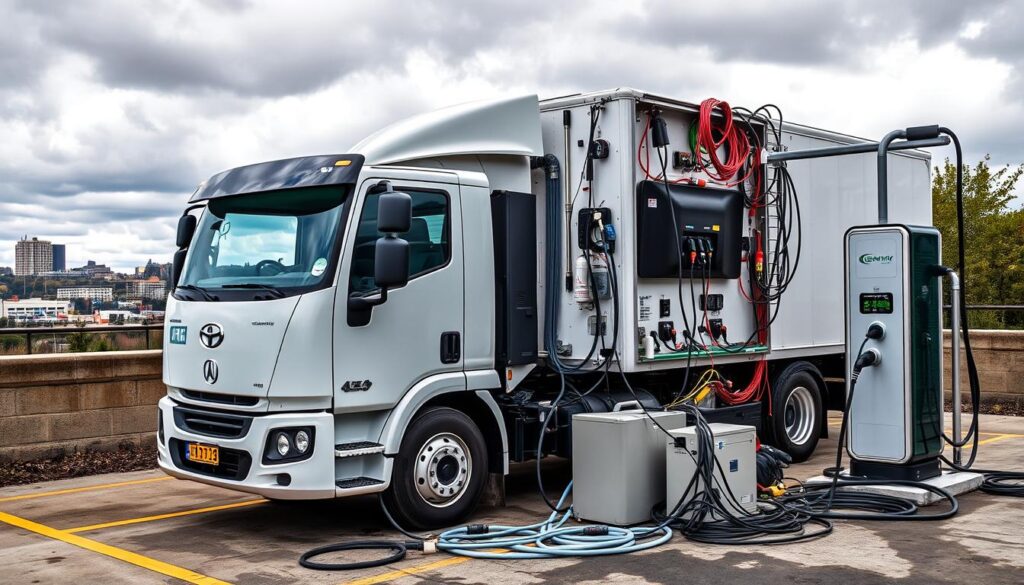
Industry adoption hinges on overcoming range anxiety and proving the reliability of range extender systems. As research on range-extended EVs progresses, manufacturers are exploring innovative solutions to extend battery life and improve overall performance.
“The future of electric trucks lies in the seamless integration of range extenders with advanced battery technologies.”
Looking ahead, emerging technologies promise to reshape the landscape. Solid-state batteries and wireless charging systems are on the horizon, potentially revolutionizing how electric trucks operate. These advancements could minimize the need for extensive charging infrastructure and boost efficiency.
| Challenge | Potential Solution |
|---|---|
| Limited charging infrastructure | Public-private partnerships for station deployment |
| High initial costs | Government incentives and subsidies |
| Range anxiety | Improved battery technology and range extenders |
| Regulatory inconsistencies | Harmonized policies across regions |
Conclusion
Range extenders are shaping up to be a game-changer for electric trucks. They offer a practical solution to the current limitations in battery technology and charging infrastructure. This blend of electric power and auxiliary energy sources is pushing the boundaries of sustainable transportation.
The future of logistics looks promising with these innovations. Range extenders allow electric trucks to cover longer distances, making them more viable for long-haul operations. This advancement in clean energy solutions is crucial for reducing the carbon footprint of the transportation sector.
As electric vehicle innovation continues to evolve, range extenders may serve as a stepping stone. They bridge the gap between current capabilities and future goals in sustainable transportation. While challenges remain, the potential benefits of range extenders make them a compelling option for the trucking industry’s green transition.
FAQ
What are range extenders for electric trucks?
How do range extenders improve electric truck performance?
What are the main challenges faced by electric trucks without range extenders?
Which companies are developing range extender technologies for electric trucks?
Are range-extended electric trucks more environmentally friendly than conventional diesel trucks?
What are the main obstacles to widespread adoption of range extenders for electric trucks?
How do range extenders affect the cost-effectiveness of electric trucks?
What future developments are expected in range extender technology?
