
Electric Car Highway Charging Speed Plateau Issues
Highway Charging Speed Plateau Issues frustrate many new electric vehicle owners who expect their cars to maintain maximum advertised kilowatt rates throughout an entire refueling session.
When stopping along major transit corridors, drivers frequently notice that after an initial burst of rapid replenishment, the intake velocity drops dramatically.
Understanding these chemical and structural limitations is crucial for planning efficient cross-country road trips and managing corporate fleet delivery expectations.
This technical assessment examines the internal cell dynamics causing these performance slowdowns, offering practical strategies to minimize time spent waiting at public plazas.
What causes the sudden deceleration of energy delivery during rapid public charging?
The primary reason behind the drop in energy intake involves the defensive programming embedded within the vehicle’s proprietary battery management system.
Lithium-ion cells absorb energy much like a dry sponge absorbs water, accepting high volumes easily at first before reaching saturation.
As the pack filling level crosses a specific threshold, forcing additional ions into the graphite anodes requires higher electrical voltage.
This structural resistance generates significant internal heat, which threatens to degrade the delicate internal separator layers permanently if left unchecked.
Experiencing Highway Charging Speed Plateau Issues is therefore an engineered safety mechanism rather than a physical equipment malfunction.
The vehicle dynamically requests a lower electrical current from the dispenser to keep internal operating temperatures within a safe functional window.
How do different battery architectures handle continuous high-voltage power input?
Vehicles utilizing modern eight-hundred-volt electrical platforms sustain elevated power intake levels significantly longer than older four-hundred-volt consumer configurations.
By doubling the operational voltage, these advanced platforms reduce the required current amperage needed to deliver identical amounts of work.
Lower amperage translates directly into minimized thermal generation within the interior copper busbars and individual cell links.
Consequently, premium vehicles can maintain rapid energy absorption closer to their maximum capacity, drastically reducing total highway downtime for travelers.
To study verified transport standardization reports, track global infrastructure rollouts, and review official sustainable mobility engineering data, the documentation portal of the International Energy Agency (IEA.org) provides extensive international industrial research registries.
| Vehicle Battery Architecture | Peak Power Rate | Average Plateau Trigger | Thermal Cooling Design | Real-World Impact on Trips |
| 800V Liquid-Cooled Pack | 270 kW – 350 kW | 65% State of Charge | Active refrigerant loops | Minimal highway delay |
| 400V Standard Pack | 120 kW – 150 kW | 45% State of Charge | Standard coolant channels | Moderate waiting times |
| 400V Passive Air-Cooled | 40 kW – 50 kW | 20% State of Charge | No active fluid circulation | Severe multi-stop delays |
| Emerging Solid-State | 400 kW – 500 kW | 80% State of Charge | Experimental thermal matrices | Next-generation target |
Why does ambient climate temperature aggravate electrical intake drops on road trips?
Extreme environmental weather forces the vehicle’s onboard thermal management hardware to work double-time before the charging process even begins.
In blazing summer heat, the cooling pumps must expend significant energy just to bring the core pack down to nominal levels.
When the vehicle plugs into a high-powered dispenser under these conditions, the thermal ceiling is breached almost instantly.
The protective software immediately limits incoming power to prevent cell swelling, leading to prolonged Highway Charging Speed Plateau Issues for stranded motorists.
Conversely, freezing winter temperatures increase the internal resistance of the chemical electrolyte, making it sluggish and unable to accept fast-moving ions safely.
Without proper internal preconditioning, the vehicle will charge at a crawl until the pack warms up through natural internal resistance.
Which route planning tactics allow motorists to bypass the slow part of the curve?
Smart drivers utilize the “curve hopping” strategy, which involves planning multiple shorter stops focused exclusively on the fastest portion of their car’s charging profile.
Instead of waiting for a single pack to fill completely, they unplug the moment the intake speed drops.
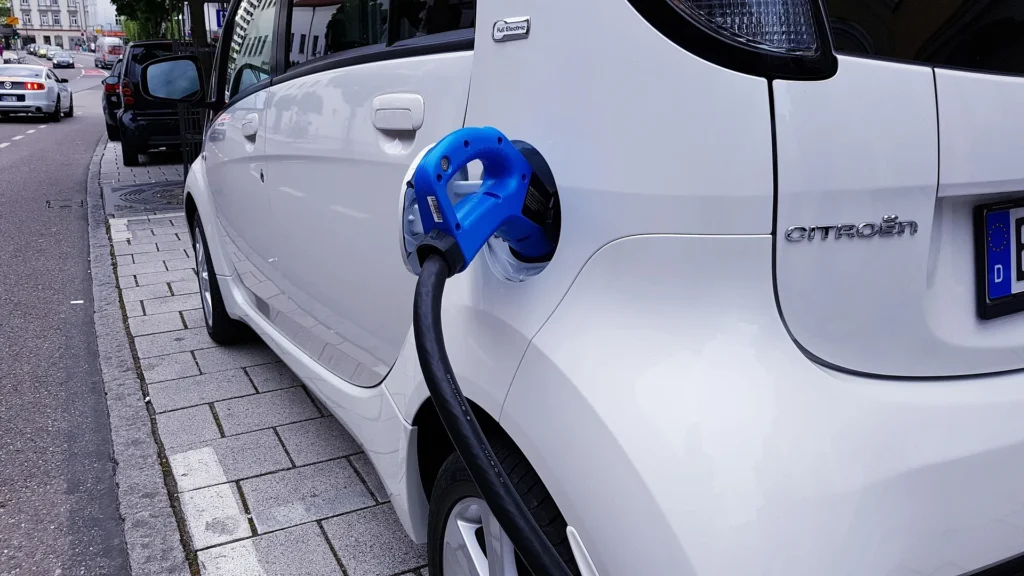
Learn more: Liquid Cooled Connectors Powering Electric Truck Charging
Operating between ten percent and sixty percent state of charge allows the vehicle to maximize its average energy absorption rate.
This tactical approach ensures you spend more time driving at highway speeds and less time attached to an unresponsive dispenser cabinet.
Encountering severe Highway Charging Speed Plateau Issues becomes less disruptive when you align your rest stops with your vehicle’s optimal chemical performance window.
Unplugging early and moving to the next station frequently saves hours over the course of a long travel day.
When will next-generation cell chemistries eliminate these technical infrastructure barriers?
The automotive sector is investing heavily in alternative chemical structures, including silicon-dominant anodes and fully solid-state electrolyte matrices.
These technological upgrades allow lithium ions to move between terminals with a fraction of the friction found in current setups.
Read more: Charging Reliability Challenges Facing Electric Transport Users
By eliminating volatile liquid components, solid-state designs resist thermal runaway at much higher operational thresholds, allowing continuous maximum energy delivery.
To review comprehensive independent transport testing data, vehicle validation statistics, and green energy research, the digital repository of the Argonne National Laboratory (ANL.gov) delivers authoritative scientific findings.
Streamlining long-range electric transport through technical awareness
Overcoming the physical limits of current battery technology requires a combination of engineering innovation and smart consumer habits.
Learn more: Highway Fast Charging Speed Plateau Above Eighty Percent
Drivers cannot change the laws of electrochemistry, but they can adapt their traveling strategies to match their vehicle’s unique performance fingerprint.
Monitor your vehicle’s live intake metrics, utilize built-in navigation systems to precondition your battery, and avoid waiting around for that final twenty percent.
Embracing these practical operational adjustments ensures a seamless road trip experience, unlocking the full potential of modern clean transportation infrastructure.
Frequently Asked Questions
Why does my car take as long to charge from eighty to one hundred percent as it did from ten to eighty?
The internal chemical resistance peaks during the final twenty percent of capacity, forcing the vehicle to drop intake speeds to a crawl to avoid destroying the cell chemistry.
Does using a three-hundred-and-fifty kilowatt charger guarantee my car will receive that speed?
No, your vehicle will only pull the maximum amount of power allowed by its internal battery management architecture and current thermal condition, regardless of the dispenser’s maximum output.
How does battery preconditioning help reduce highway charging delays?
Preconditioning uses onboard heaters or coolers to bring the battery pack to the perfect chemical temperature while driving, allowing it to accept maximum power immediately upon plugging in.
Can repeated fast-charging sessions on a single road trip permanently damage my battery?
Modern active cooling systems protect the cells from immediate damage, but frequent back-to-back fast charging without cool-down periods can accelerate long-term capacity degradation.
