
Best Books and Documentaries About Green Energy

Best Books and Documentaries About Green Energy: The shift toward sustainable power is one of the defining narratives of our time.
Understanding this monumental transition requires going beyond headlines and diving deep into the science, politics, and economics at play.
For those seeking clarity and genuine insight into this transformative sector, high-quality resources are essential.
How can one truly grasp the scale and urgency of the renewable energy transition?
Essential Reading: What Are the Most Insightful Books on Renewable Energy?
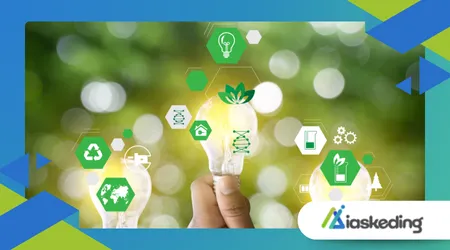
Books offer the necessary depth and historical context often missing in short-form media. They allow for a comprehensive exploration of complex topics.
A great starting point for any enthusiast is a deep dive into foundational texts.
These literary works illuminate the engineering challenges and incredible potential of technologies like solar and wind power.
They often trace the history of fossil fuels to show the magnitude of our current energy dependence.
One truly essential read remains “The New Map: Energy, Climate, and the Clash of Nations” by Daniel Yergin.
Yergin provides a geopolitical framework for understanding energy conflicts. The book effectively contextualizes the global push for cleaner sources.
Another highly recommended title is “Renewables: The Politics of a Global Transition” by Hugh Saddler. This volume offers a rigorous analysis of the policy mechanisms driving adoption.
It provides a sobering look at the political hurdles still facing widespread implementation.
++The Electrification Revolution: How Electric Trucks Are Impacting the Mining Industry
These books collectively paint a picture of a sector undergoing rapid, often messy, but ultimately irreversible change.
They are invaluable for journalists, policymakers, and private citizens alike.
++How to Make Your Business More Energy-Efficient
They detail the intricate balance between technological innovation and political will.
Visualizing the Future: Which Documentaries Best Illustrate the Green Energy Shift?

Documentaries are potent tools for communicating the emotional and physical reality of climate change and energy solutions.
They bring complex scientific concepts and remote installations directly to the viewer. Visual media also excels at showcasing the human element of this global crisis.
One standout film is “Before the Flood,” executive produced and narrated by Leonardo DiCaprio.
While broader than just energy, it powerfully connects climate science to the need for renewable sources. It presents a comprehensive, alarming, yet hopeful call to action.
++Why Renewable Energy Matters for Our Planet
Another powerful documentary worth seeking out is “Catching the Sun.” This film focuses on the global race for solar energy dominance.
It provides a unique perspective from different countries and economic classes. The film highlights the massive job creation potential of the solar industry worldwide.
Consider the analogy of a historical shift from the horse-and-buggy to the automobile. Books are like the engineering manuals and economic forecasts of that era.
++25 Inspiring Climate Change Books To Read This Year
Documentaries, on the other hand, are the early newsreels showing the cars in motion.
The Innovation Front: How Current Tech is Driving the Energy Transition
The progress in battery storage alone has been revolutionary in the last few years. Lithium-ion technology, for example, has seen massive cost reductions.
This technological leap makes intermittent sources like solar and wind more reliable. This storage capacity is the lynchpin for a fully renewable grid.
Large-scale projects are now proving the viability of these technologies globally.
A prime Best Books and Documentaries About Green Energy example is the massive solar farms in the Atacama Desert in Chile.
These facilities generate reliable power even in challenging environmental conditions. Their success provides a real-world blueprint for other developing nations.
Furthermore, offshore wind farms are scaling up to unprecedented sizes, especially in Europe. The sheer power generated by these turbines is changing national energy profiles.
The U.K. has repeatedly set records for coal-free power generation.
A truly important data point to remember comes from the International Energy Agency (IEA).
Their 2024 Renewables Report stated that global renewable electricity capacity is expected to increase by over 1,000 gigawatts (GW) between 2024 and 2029.
This massive number clearly demonstrates an accelerating trajectory.
This table, compiled from public IEA data, illustrates the cost-competitiveness of renewables:
| Technology | Average Global Levelized Cost of Electricity (LCOE) 2024 (USD/MWh) |
| Utility-Scale Solar PV | $30 – $50 |
| Onshore Wind | $25 – $45 |
| Coal (New Build) | $60 – $110 |
| Gas Combined Cycle (New Build) | $50 – $90 |
Data based on current industry estimates and IEA trends.
This table unequivocally shows that solar and wind are often the cheapest forms of new electricity generation available today.
The Broader Impact: Why is the Transition to Green Energy so Critical?
The transition is about much more than just environmental sustainability. It is also an economic and national security imperative.
Reducing reliance on imported fossil fuels stabilizes national budgets and minimizes geopolitical risk.
Diversifying a nation’s energy mix provides a powerful buffer against global price shocks. A nation running on its own sunshine and wind is inherently more secure.
This independence is a significant argument for accelerated green investment.
The creation of new, high-skill jobs in manufacturing, installation, and maintenance is another massive benefit.
This new sector provides a clear pathway for workers transitioning from legacy industries. Entire new economies are being built around this technological transformation.
This is a critical aspect addressed by the Best Books and Documentaries About Green Energy.
Engaging with the Future: How to Maintain Momentum
For those committed to tracking this energy evolution, consistently engaging with expert analysis is crucial.
The field moves so quickly that yesterday’s breakthrough is today’s standard. The search for the Best Books and Documentaries About Green Energy is a continuous process.
This ongoing exploration is vital for informed citizenship in the 21st century.
Frequently Asked Questions
Q: Are there any great resources on nuclear energy’s role in the energy transition?
A: Yes, many recent publications and films are re-examining nuclear power.
Books like “A Bright Future” by Joshua Goldstein and Staffan Qvist argue for its indispensable role as a clean, reliable, and dispatchable energy source. This perspective is vital for a comprehensive understanding of a carbon-free grid.
Q: Where can I find the most current data on renewable energy capacity?
A: The two primary global sources are the International Renewable Energy Agency (IRENA) and the International Energy Agency (IEA).
Both organizations release highly detailed annual reports and interactive statistics that are available free online.
Q: How has the perception of renewable energy changed over the last decade?
A: The perception has fundamentally shifted from one of a niche, expensive, subsidized technology to the default, lowest-cost, and fastest-growing source of new power generation globally.
This profound change is documented in the Best Books and Documentaries About Green Energy.
