
Exploring the Future of Electric Aerial Drones for Delivery
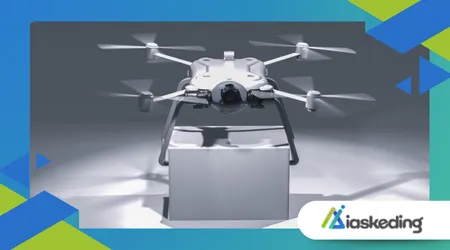
The Future of Electric Aerial Drones for Delivery promises a paradigm shift, where packages arrive at our doorsteps not via a truck, but from the air.
The rapid evolution of electric transport is not confined to our roads. It’s soaring into the skies, reshaping the logistics industry in unprecedented ways.
This isn’t science fiction; it’s a rapidly approaching reality, driven by innovation, efficiency, and a push for sustainable urban solutions.
As we look at this airborne revolution, we must consider its transformative potential and the challenges that lie ahead.
The Drone Delivery Revolution: An Overview
The concept of drone delivery is surprisingly simple. A small, autonomous electric aircraft carries a payload, typically a lightweight package, from a distribution hub directly to the customer.
Companies like Amazon Prime Air and Wing, a subsidiary of Alphabet, have been at the forefront of this movement.
They’ve conducted thousands of successful test flights, proving the viability of this model for specific types of deliveries, particularly in suburban and rural areas where traditional logistics are often less efficient.
The core appeal lies in speed and environmental benefits.
++How to Prepare Your Garage for Overnight EV Charging
With no traffic to contend with, these drones can deliver packages in minutes, not hours, and their electric propulsion eliminates carbon emissions from the final leg of the delivery journey.
Transforming Urban Logistics with Electric Drones
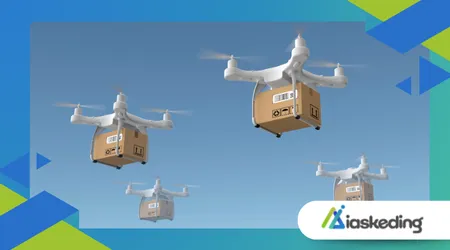
The implementation of drone delivery in densely populated urban environments presents a unique set of challenges and opportunities.
Imagine a city where rooftops become landing pads, and a network of drones zips through designated air corridors.
This could dramatically reduce road congestion, noise pollution, and the number of delivery vans on the streets.
++What Is a Personal Electric Vehicle (PEV)?
Think of it like a new, silent circulatory system for goods, moving above the chaotic ground-level traffic.
This shift requires a fundamental rethinking of city infrastructure and air traffic management.
It’s a logistical puzzle, but one with immense potential to create a more livable and efficient urban landscape.
The Future of Electric Aerial Drones for Delivery is inextricably linked to how cities adapt and integrate this new technology.
Economic and Environmental Impact
The economic case for drone delivery is compelling. It drastically reduces labor costs associated with the “last mile” of delivery, which is often the most expensive part of the supply chain.
Furthermore, the operational cost of an electric drone is a fraction of a traditional delivery vehicle.
++How to Choose the Right Electric Bike for Your Needs
This efficiency could lead to lower delivery fees for consumers and increased profitability for businesses. Environmentally, the benefits are clear.
A study by researchers at Carnegie Mellon University found that drone deliveries, especially when powered by renewable energy, can have a significantly lower carbon footprint than truck-based deliveries.
Their research, published in a 2018 edition of the journal Renewable and Sustainable Energy Reviews, highlights that a small package delivered by a drone has a carbon impact of roughly one-third of a conventional delivery vehicle.
This single data point underscores the massive potential for emissions reduction.
The Obstacles to Overcome
While the vision is promising, significant hurdles remain. The most prominent challenges are regulatory and technical.
Airspace is a complex domain, and establishing a safe, regulated framework for thousands of commercial drones is a monumental task for aviation authorities like the FAA.
Privacy concerns are also a major issue. How do we ensure that a drone delivering a package doesn’t inadvertently record or surveil private property?
Read here: Drone Delivery Systems: The Future of Package Transport
Another challenge is the payload limitation. Current drone technology is best suited for small, lightweight items.
Delivering a large piece of furniture or a week’s worth of groceries is not feasible with today’s technology.
The Future of Electric Aerial Drones for Delivery: A Look at Current Innovations
Companies are relentlessly innovating to overcome these limitations.
For example, some are developing drone charging stations that can be mounted on rooftops or in public parks, allowing drones to extend their range and operate more efficiently in urban areas.
Others are focused on creating vertical take-off and landing (VTOL) designs that are more stable in windy conditions and capable of carrying heavier loads.
The goal is to build a robust and reliable delivery network.
This is not just about making a drone that can fly; it’s about building an entire ecosystem that supports the Future of Electric Aerial Drones for Delivery.
A Global Perspective on Adoption
The adoption of drone delivery varies widely across the globe.
While the United States and Europe are still in the testing and regulatory phase, countries with more flexible regulations are seeing real-world applications.
For instance, in some parts of China, drones are already delivering medicines and essential goods to remote villages.
In Rwanda, a company called Zipline has been using drones to deliver blood and medical supplies to hospitals and clinics for years, saving countless lives.
These real-world examples serve as powerful proof-of-concept for the transformative power of drone technology.
As a journalist covering this beat, I’ve seen firsthand how these small-scale applications can have a huge impact.
Comparing Delivery Methods: Drones vs. Traditional
| Delivery Method | Average Delivery Time | Cost per Delivery (Estimate) | Carbon Footprint | Operational Challenges |
| Electric Drone | 15-30 minutes | Low ($1-$3) | Very Low | Weather dependency, payload limits, regulation |
| Traditional Van | 1-2 days | High ($5-$10) | High | Traffic congestion, fuel costs, labor costs |
| Bicycle Courier | 1-2 hours | Moderate ($3-$7) | Very Low | Limited range, limited payload, weather |
The table above illustrates the distinct advantages of drone delivery, particularly in speed and environmental impact.
The Future of Electric Aerial Drones for Delivery hinges on overcoming the operational challenges, namely payload and weather.
The Road Ahead for Electric Drone Delivery
The path to widespread adoption is not a straight line. It’s a complex aerial ballet of technology, regulation, and public acceptance.
As we move forward, we will see more and more pilot programs and partnerships between tech companies and cities.
The Future of Electric Aerial Drones for Delivery is an exciting space to watch.
It is poised to redefine our relationship with commerce and logistics, making our cities smarter and more sustainable. Is it time to start thinking of the sky as our new highway?
Concluding Thoughts
The Future of Electric Aerial Drones for Delivery is a future of efficiency, sustainability, and unparalleled convenience.
It’s a solution to the perennial problem of “the last mile,” offering a swift and silent alternative to our current delivery infrastructure.
While challenges remain, the momentum is undeniable. This is a story of innovation, and we are just at the beginning.
As a columnist, I am committed to following every development, every test flight, and every new policy to bring you the most accurate and up-to-date information on this exciting frontier.
(FAQs)
Are drones safe for delivery?
Yes, companies are using advanced sensors and software to ensure drones can detect and avoid obstacles, maintaining a safe distance from people and property.
What can drones deliver?
Currently, drones are best suited for delivering small, lightweight items, such as medicines, food, and small retail packages.
Will drones make a lot of noise?
Modern electric drones are significantly quieter than traditional vehicles. As the technology improves, they are expected to become even less intrusive.
How far can a drone fly for delivery?
The range varies depending on the drone model and payload, but most commercial delivery drones are designed for short-to-medium-range flights, typically within a 5-10 mile radius of a distribution center.
