
Why Electric Trucks Require Different Battery Chemistries Than Electric Cars
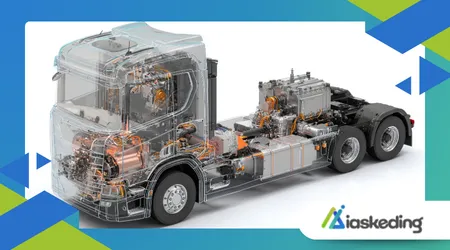
Electric Trucks Require Different Battery Chemistries because the operational demands of heavy-duty hauling fundamentally differ from the requirements of personal commuting and leisure travel in 2026.
As the transportation industry undergoes a rapid shift toward decarbonization, the “one-size-fits-all” approach to battery technology has proven insufficient.
While passenger cars prioritize range and acceleration, commercial trucks must balance payload capacity, extreme durability, and total cost of ownership (TCO).
This article explores the technical and economic reasons why the lithium-ion solutions in your sedan are not the same as those powering a 40-ton semi-truck.
Summary of Key Insights
- Energy Density vs. Durability: Trucks prioritize cycle life over pure weight reduction.
- Chemistry Variants: LFP and LMFP are dominating the trucking sector in 2026.
- Operational Demands: Frequent fast-charging and heavy towing require thermal stability.
- Cost Sensitivity: Logistics companies focus on cents-per-mile rather than peak performance.
What is the difference between truck and car battery requirements?
The primary distinction lies in the duty cycle. A typical passenger car sits idle for 95% of its life, covering perhaps 12,000 miles annually.
In contrast, a Class 8 electric truck often runs 20 hours a day, covering over 100,000 miles per year.
Because Electric Trucks Require Different Battery Chemistries, engineers focus on “cycle life.” A battery that lasts 1,500 cycles might suffice for a car, providing a decade of use.
However, that same battery would degrade in less than two years in a heavy-duty trucking environment.
Read more: How Ambient Temperature Swings Cause Micro-Cracks Inside EV Cells Over Time
Furthermore, trucks are weight-sensitive. Every pound of battery weight is a pound of lost revenue-generating payload.
This creates a paradox where trucks need high energy density but cannot sacrifice the longevity required for commercial profitability.

Why do electric trucks favor LFP over NMC chemistries?
While Nickel Manganese Cobalt (NMC) batteries dominate the luxury car market due to their high energy density, the trucking industry has pivoted toward Lithium Iron Phosphate (LFP).
This shift is driven by the fact that Electric Trucks Require Different Battery Chemistries to maintain safety under constant high-load stress.
Explore more: How Multi-Motor Configurations Improve Torque Distribution in Heavy-Duty Electric Trucks
LFP batteries are significantly more stable. They offer a much lower risk of thermal runaway, which is crucial when hauling volatile or expensive freight.
More importantly, LFP cells can withstand thousands of charge cycles with minimal degradation.
In 2026, many fleets are adopting Lithium Manganese Iron Phosphate (LMFP). This “hybrid” chemistry offers the safety of iron phosphate with a 15-20% boost in energy density.
This allows trucks to travel further without increasing the physical footprint of the battery pack.
How does payload impact battery choice for heavy-duty hauling?
Towing and payload are the “range killers” of the electric world.
When a truck is fully loaded, the energy required to maintain highway speeds increases exponentially compared to an empty vehicle or a light passenger car.
Research from Volvo Trucks indicates that specialized control strategies are essential for truck batteries.
These systems manage the massive heat generated when a 500-kW motor pulls a 12,500-lb load up a steep grade.
++Can Electric Trucks Survive in Rural, Off-Grid
Because Electric Trucks Require Different Battery Chemistries, manufacturers are moving toward cells that handle “high C-rates.” This refers to the speed at which energy is drawn from the battery.
A car might rarely hit its peak draw, but a truck does so every time it accelerates from a stoplight with a full trailer.
Battery Chemistry Comparison: Cars vs. Trucks (2026 Data)
| Feature | Passenger Cars (NMC/NCA) | Commercial Trucks (LFP/LMFP) |
| Typical Cycle Life | 1,000 – 2,000 cycles | 4,000 – 7,000+ cycles |
| Energy Density | 250 – 300 Wh/kg | 160 – 210 Wh/kg |
| Cost per kWh | $100 – $130 | $60 – $85 |
| Thermal Stability | Moderate | Excellent |
| Primary Goal | Maximum Range / Performance | Durability / Low TCO |
Which emerging technologies are shaping the 2026 truck market?
Solid-state batteries are the “holy grail” for both sectors, but their implementation differs. In cars, solid-state tech is marketed for “1,000-mile ranges.”
In trucks, it is being utilized to reduce charging downtime through ultra-fast 4C or 6C charging rates.
We are also seeing the rise of sodium-ion batteries for short-haul urban delivery.
Since Electric Trucks Require Different Battery Chemistries based on their specific routes, sodium-ion offers a low-cost, cobalt-free alternative for “last-mile” logistics where weight is less of a factor than initial purchase price.
These 2026 models often feature modular battery packs.
This allows a fleet manager to swap chemistries depending on the truck’s assignment—using high-density packs for long-haul routes and high-cycle packs for city stop-and-go tasks.
What are the thermal management challenges for electric trucks?
Managing heat in a 600-kWh truck battery is vastly more complex than in a 75-kWh car battery.
During rapid charging at a megawatt-scale station, the battery must dissipate incredible amounts of thermal energy to prevent cell damage.
Commercial vehicles use advanced liquid-to-refrigerant cooling systems.
These systems ensure that Electric Trucks Require Different Battery Chemistries that can operate efficiently within a narrow temperature window, even when the ambient air is freezing or scorching.
If a truck battery gets too hot, the internal resistance increases, leading to a “throttling” of power. For a logistics company, this means slower deliveries and lost revenue.
Therefore, chemistries with lower internal resistance are prioritized for heavy-duty applications.
Conclusion
The evolution of the transport sector has made it clear that Electric Trucks Require Different Battery Chemistries to be viable.
While cars chase the prestige of high speed and long range, trucks are built on the backbone of reliability and economic efficiency.
By choosing LFP and LMFP variants, the trucking industry is prioritizing a sustainable and cost-effective future.
As we move through 2026, the divergence between consumer and commercial battery tech will only widen, driven by the uncompromising demands of global logistics.
For more technical specifications on the latest fleet energy solutions, visit the International Energy Agency (IEA) Global EV Outlook.
Frequently Asked Questions
Why can’t we just put more car batteries in a truck?
Adding more car-grade (NMC) batteries would make the truck too heavy for legal payload limits. Additionally, car batteries would wear out too quickly under the intense daily usage of a commercial fleet.
Is LFP better for the environment than NMC?
Generally, yes. LFP batteries do not use cobalt or nickel, which are often associated with high environmental and ethical mining costs. This makes them a more sustainable choice for large-scale fleet deployments.
How long does a 2026 electric truck battery last?
With modern LFP or LMFP chemistry, a truck battery can last between 8 to 12 years, or approximately 500,000 to 700,000 miles, before dropping below 80% of its original capacity.
Can electric trucks use Tesla’s 4680 cells?
While some light-duty trucks use them, heavy-duty semis often require prismatic LFP cells for better packaging and thermal management in large-scale packs exceeding 500 kWh.
