
The Hidden Cost of Payload Reduction in Electric Freight Vehicles
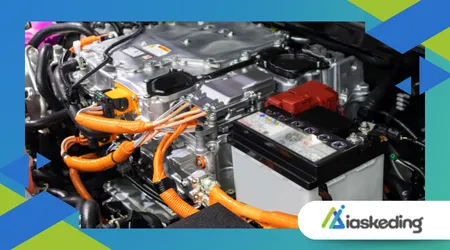
As we move through 2026, the industry faces a paradoxical challenge: zero-emission targets are non-negotiable, yet the physical laws of energy density remain stubborn.
While battery technology has improved significantly, the “weight penalty” of high-capacity energy storage continues to squeeze the margins of heavy-duty haulers.
Understanding these hidden costs is no longer just for engineers—it is a critical financial imperative for fleet managers nationwide.
Executive Summary: The Payload Dilemma
- The Weight Penalty: Current Class 8 electric trucks carry roughly 4,000 to 8,000 lbs of additional weight compared to diesel models.
- Operational Shifts: High-density cargo (beverages, construction) is most affected, whereas volume-limited freight (e-commerce) remains largely insulated.
- Regulatory Relief: New federal and state derogations allow for a 2,000-lb increase in Gross Vehicle Weight (GVW), though this rarely covers the full battery deficit.
- Financial Impact: Loss of payload can lead to a 10-15% increase in the number of trips required for the same freight volume.
What is the actual impact of battery weight on hauling?
Payload Reduction in Electric Freight Vehicles, the transition to electric powertrains replaces a relatively light internal combustion engine and fuel tank with a massive lithium-ion battery pack.
In 2026, a 500-mile range Tesla Semi or Freightliner eCascadia requires a battery system weighing upwards of 12,000 lbs.
Even after subtracting the weight of a traditional diesel engine and transmission, the net increase is substantial.
This weight directly eats into the legal cargo capacity. For a standard 80,000-lb GVW limit, every pound of battery is a pound of lost revenue.
This means that for “weigh-out” applications—where the trailer is filled to the weight limit before it is filled to the ceiling—the electric truck is inherently less efficient per trip.
Why does payload reduction in electric freight vehicles matter for TCO?
Total Cost of Ownership (TCO) is the gold standard for fleet evaluation, but many models overlook the “opportunity cost” of lost cargo.
If a fleet must deploy 11 electric trucks to do the work of 10 diesel trucks because of Payload Reduction in Electric Freight Vehicles, the capital expenditure and labor costs rise by 10% immediately.

Furthermore, the energy consumption of an electric truck is sensitive to weight.
A fully loaded Class 8 vehicle sees its range drop by nearly 0.5% for every 1,000 lbs of added mass.
In 2026, where charging infrastructure is still scaling, this reduced range necessitates more frequent stops, further compounding the productivity loss.
++ Why Electric Trucks Require Different Battery Chemistries Than Electric Cars
Managers must now calculate the “cost per ton-mile” rather than just “cost per mile” to get an accurate financial picture.
Payload and Performance Comparison (2026 Data)
| Vehicle Category | Avg. Diesel Payload (lbs) | Avg. Electric Payload (lbs) | Net Payload Loss | Typical Application |
| Class 6 Box Truck | 19,500 | 16,800 | -13.8% | Local Delivery |
| Class 8 Regional | 46,000 | 41,500 | -9.7% | Hub-to-Hub |
| Class 8 Long-Haul | 44,000 | 36,000 | -18.2% | Interstate |
| Refuse/Waste | 22,000 | 14,500 | -34.1% | Municipal |
Which freight sectors are most vulnerable to capacity loss?
Not all cargo is created equal in the eyes of an electric motor. The primary victims of Payload Reduction in Electric Freight Vehicles are sectors dealing with heavy, dense materials.
For example, the waste management industry has reported significant challenges.
A typical electric refuse truck may lose up to 30% of its hauling capacity because the hydraulic systems and batteries required for stop-and-go compaction are exceptionally heavy.
++ How Route Topography Impacts Energy Consumption in Electric Long-Haul Trucks
Conversely, the “cube-out” sectors—like consumer electronics or apparel—are largely unaffected.
Since these trailers hit their volume limit long before they hit their weight limit, the battery weight is essentially “free” from a revenue perspective.
For these fleets, the transition to electric is a much easier sell, as the operational profile fits the technology’s current limitations.
How are manufacturers mitigating the weight gap in 2026?
Vehicle OEMs are not standing still. By 2026, we are seeing the first widespread use of structural battery packs, where the battery housing serves as the vehicle’s chassis.
++ Thermal Runaway Prevention in Megawatt-Charging Electric Trucks: Engineering Trade-Offs
This eliminates redundant steel and can shave nearly 1,500 lbs off the total vehicle weight. Additionally, the move toward Silicon Carbide (SiC) inverters has allowed for smaller, lighter cooling systems.
Advanced telematics are also playing a role. Real-time payload monitoring systems now integrate with route planning software to optimize state-of-charge (SoC) management.
By knowing exactly how much a trailer weighs, the software can adjust speed and regenerative braking intensity to squeeze every possible mile out of the battery, partially offsetting the need for larger, heavier packs.
When will payload parity become a reality?
Predicting the exact date for payload parity is a moving target, but solid-state batteries are the “north star.”
Although the U.S. Department of Transportation and various states have granted an additional 2,000-lb allowance for zero-emission vehicles, the gap remains.
In 2026, while still in pilot phases for heavy-duty applications, solid-state cells promise nearly double the energy density of current liquid-electrolyte batteries.
This would theoretically allow an electric truck to match diesel weight profiles by the early 2030s.
In the interim, the industry is leaning on “Hydrogen-Electric” hybrids for the heaviest long-haul routes.
Hydrogen fuel cells offer much higher energy-to-weight ratios than batteries, though they face their own hurdles in terms of fueling infrastructure and green hydrogen costs.
For most fleets, the strategy involves a “mixed-modality” approach: electric for the “cube-out” routes and diesel or hydrogen for the “weigh-out” tasks.
Conclusion: Navigating the Transition
The Payload Reduction in Electric Freight Vehicles is a manageable hurdle, but it requires a fundamental shift in how we plan logistics.
Success in 2026 depends on high-resolution data: knowing the density of your freight, the topography of your routes, and the specific weight limits of your operational regions.
While the “hidden cost” of weight is real, it is often offset by the plummeting costs of maintenance and the increasing pressure of carbon taxation.
The future of freight is electric, but it is a future where every pound counts.
For more technical specifications on the latest 2026 heavy-duty models, visit the North American Council for Freight Efficiency (NACFE).
FAQ: Frequently Asked Questions
Does the 2,000-lb GVW federal allowance apply to all states?
Most states have adopted the federal 2,000-lb derogation for ZEVs, but some local bridge laws and secondary road weight limits still strictly enforce the 80,000-lb cap. Always check local DOT regulations for specific routes.
How does payload affect the charging time of an electric truck?
Weight increases energy consumption per mile. A heavier load means you will arrive at the charger with a lower SoC, requiring a longer dwell time to reach the necessary range for the next leg of the journey.
Can I compensate for payload loss by using smaller batteries?
Yes, “right-sizing” the battery is a common strategy. If your route is only 150 miles, using a 300-kWh pack instead of a 600-kWh pack can save several thousand pounds in vehicle weight, restoring lost payload capacity.
Are there tires specifically designed for heavier electric truck payloads?
Yes, manufacturers like Michelin and Goodyear have released high-load-capacity tires in 2026 specifically designed to handle the increased constant mass of electric trucks while maintaining low rolling resistance.
