
How “Smart Charging Clusters” Are Reducing Grid Peaks in High-Density Urban Areas
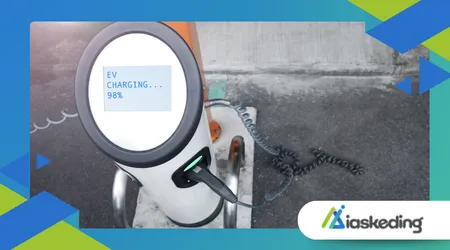
Smart Charging Clusters and Energy Efficiency
With the exponential growth of the electric vehicle (EV) fleet in Brazilian and global metropolises, conventional charging infrastructure has reached its physical limit.
It is no longer enough to simply install chargers; systemic intelligence is required.
This article explores how dynamic load management is transforming residential complexes and business centers into resilient and efficient energy cells.
Summary
- Definition and operation of smart clusters.
- Direct impact on reducing demand peaks.
- Support technologies: V2G and load balancing.
- Comparative data on energy efficiency.
- Frequently asked questions about implementation and costs.
What are Smart Charging Clusters and how do they operate?
A Smart Charging Cluster system consists of a grouping of interconnected charging stations that intelligently share a limited power source.
Unlike isolated chargers, which operate individually at maximum power, a cluster acts as a single, coordinated ecosystem.
Through cloud algorithms and real-time communication via the OCPP 2.0.1 protocol, management software monitors the building’s total consumption.
When multiple vehicles are connected simultaneously, the system redistributes the available electric current according to each user’s priority.
This technology prevents the local substation from being overloaded, eliminating the need for expensive investments in new transformers or heavy structural renovations.
In dense urban areas where space and electrical capacity are scarce, this decentralized approach ensures all cars charge without tripping the main circuit breaker.
How do Smart Charging Clusters reduce peaks in the power grid?
Peak reduction occurs through Peak Shaving, a technique that shifts energy consumption from high-demand periods to idle times.
Smart Charging Clusters identify when the building reaches its maximum consumption and automatically reduce the power supplied to the EVs.
Many users park their cars at 6:00 PM, exactly when residential consumption peaks due to the use of electric showers…
++ What Happens to Electric Cars in a Blackout? Backup Strategies
How do Smart Charging Clusters consume power during peak periods on the electrical grid?
Instead of initiating an immediate recharge, the cluster manages energy delivery gradually throughout the night.
In this way, the grid’s load curve remains stable, avoiding voltage fluctuations that could damage sensitive electronic equipment.
The public grid also benefits, as demand leveling reduces the need to activate emergency thermoelectric power plants, which are more polluting.
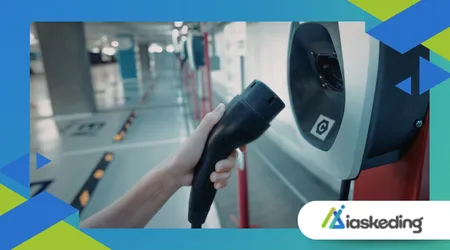
Why is this technology vital for high-density urban areas?
Cities like São Paulo and Rio de Janeiro have an aging electrical infrastructure that was not designed to support thousands of high-capacity automotive batteries.
Implementing Smart Charging Clusters is the only viable way to democratize access to charging in high-rise buildings.
Without intelligent management, a residential complex with 50 parking spaces would require an installed power capacity equivalent to a small industrial park.
++ How Ambient Temperature Swings Cause Micro-Cracks Inside EV Cells Over Time
Why is this technology vital for high-density urban areas?
Cities like São Paulo and Rio de Janeiro have an aging electrical infrastructure that was not designed to support thousands of high-capacity automotive batteries.
Implementing Smart Charging Clusters is the only viable way to democratize access to charging in high-rise buildings.
Without intelligent management, a residential complex with 50 parking spaces would require an installed power capacity equivalent to a small industrial park.
What are the economic benefits for residential complexes and fleet operators?
The savings generated by Smart Charging Clusters go beyond the electricity bill, directly impacting the General Sales Value (GSV) of properties.
Buildings prepared for the energy transition are more highly valued and attract modern tenants who have already moved away from internal combustion engines.
Fleet managers can also reduce the Total Cost of Ownership (TCO) by avoiding penalties for exceeding the demand contracted with utility companies.
++ Why Fast Charging Efficiency Drops After 60% SOC: The Physics Behind Charging Curves Explained
What are the financial advantages for property managers and fleet owners?
Management software allows for individualized billing per user, ensuring that energy costs are distributed fairly and transparently.
Below, we present a comparative table demonstrating the efficiency of intelligent management in a typical scenario of 10 electric vehicles charging simultaneously in a commercial building.
Load Management Comparison (Scenario: 10 EV)
| Feature | Traditional (No Management) | With Smart Charging Clusters |
| Total Power Required | 70 kW to 220 kW | 22 kW to 40 kW (Optimized) |
| Power Outage Risk | Very High | Near Zero |
| Infrastructure Cost | High (Transformer Replacement) | Low (Software/Network only) |
| Tariff Optimization | Non-existent | Maximum (Off-peak charging) |
| Scalability | Limited by hardware | High via software updates |
When does Vehicle-to-Grid (V2G) integration become relevant?
The natural evolution of Smart Charging Clusters is V2G technology, where cars not only consume energy but also return it to the grid.
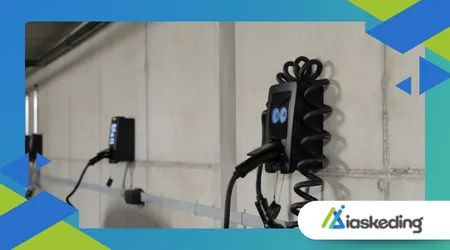
In 2026, electric vehicles will function as giant batteries on wheels for the urban system.
In 2026, this integration allows EVs to function as giant batteries on wheels for the urban system.
During a grid failure or an extreme demand peak, the cluster can request that connected cars provide a small percentage of their battery capacity to stabilize the building.
The vehicle owner is financially compensated for this service, creating a new sustainable business model.
This bidirectional exchange transforms the parking lot into a virtual power plant, capable of responding rapidly to variations in grid frequency.
It is the definitive solution to balance the intermittency of renewable sources, such as wind and solar, within the context of smart cities.
Conclusion
Smart Charging Clusters have moved beyond being a futuristic promise to become the gold standard for urban electric charging infrastructure.
They solve the paradox of increasing the electric vehicle fleet without collapsing existing power distribution grids.
By merging robust hardware with artificial intelligence algorithms, this technology promotes energy efficiency, financial savings, and greater safety for users.
The transition to sustainable mobility depends directly on our ability to manage limited resources in a brilliant and connected way.
For further technical details on the future of energy and global electrification trends, consult the IEA (International Energy Agency) technical reports, which detail the role of EVs in urban decarbonization.
FAQ: Frequently Asked Questions
Is it possible to install Smart Charging Clusters in old buildings?
Yes, the technology is ideal for older buildings because it utilizes available electrical capacity intelligently, avoiding costly structural renovations and main wiring replacements.
Does the system work with any electric car model?
Smart Charging Clusters operate via universal protocols (OCPP), making them compatible with the vast majority of modern vehicles that support Type 2 Alternating Current (AC) charging.
Who pays the electricity bill in a shared charger?
The management software identifies each user through RFID cards or mobile apps, allowing for individualized and automatic billing of each vehicle’s consumption within the cluster.
Does charging become slower when many cars are connected?
Speed may be momentarily reduced to protect the grid, but the system prioritizes completing the charge for all vehicles by the user’s defined departure time.
Is there a risk of hackers controlling the charging cluster?
Smart Charging Cluster systems use end-to-end encryption and rigorous cybersecurity layers to protect both user data and the integrity of the power grid.
