
Comparing the Lifespan of Electric and Gas-Powered Scooters

Comparing the Lifespan of Electric and Gas-Powered Scooters reveals fascinating differences, moving beyond just initial purchase price.
The question of durability is paramount for any consumer.
When choosing between an electric and a traditional gas-powered scooter, a key consideration for many riders is the long-term reliability and total cost of ownership.
What Determines the Lifespan of Electric Scooters?
The electric scooter’s longevity centers primarily on its battery pack. This is the single most critical, and often most expensive, component.
Modern lithium-ion batteries are robust, generally rated for a set number of charging cycles.
Typically, an electric scooter battery maintains about 70-80% of its original capacity after 500 to 1,500 charge cycles, which is a significant operating period.
Proper charging habits and temperature management substantially extend the battery’s effective life. Avoiding deep discharges and extreme heat is essential for maximum longevity.
Beyond the battery, electric scooters have fewer moving parts, contributing to lower wear and tear. The electric motor, being brushless, requires almost no routine maintenance.
This simplicity in design translates directly into fewer potential points of failure over time. A well-maintained electric scooter can easily exceed 10 years of service.
++How to Finance an Electric Motorcycle
The primary mechanical components needing attention are the tires and brakes, much like their gas-powered counterparts.
What Factors Impact the Durability of Gas-Powered Scooters?
The reliability of a gas scooter, conversely, rests heavily on the internal combustion engine (ICE). This complex machine contains numerous moving parts subjected to intense heat and friction.
Routine maintenance is non-negotiable for a gas scooter to achieve its potential longevity. Oil changes, spark plug replacements, and belt inspections are frequent requirements.
Failure to perform timely, necessary servicing can lead to catastrophic engine failure, drastically shortening the scooter’s life. The engine’s total lifespan is a direct function of the owner’s diligence.
Transmissions and other mechanical components also face consistent stress and degradation from use. The engine’s intricate nature means more opportunities for costly repairs.
Read more: Electric buses and e-mobility in public transit: the future of zero-emission cities
While a high-quality gas scooter can last many years, its cumulative maintenance costs and downtime tend to be higher.
How Does the Complexity of Components Affect Longevity?
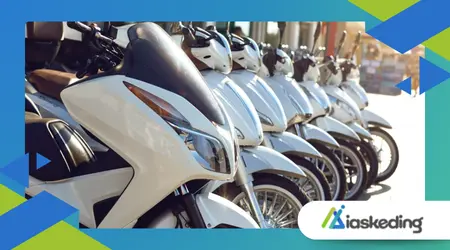
This is where the divergence in the Lifespan of Electric and Gas-Powered Scooters becomes most evident. Electric propulsion is inherently simpler.
Imagine a highly complex, multi-geared mechanical clock versus a simple digital stopwatch; both tell time, but one has far more pieces that can break. That is the fundamental difference in longevity.
The internal combustion engine relies on a coordinated explosion for power. This repeated shock and heat inherently accelerate material fatigue.
Electric scooters, conversely, use magnetic fields to generate motion, a much smoother and less stressful process. The electric drivetrain is far less susceptible to mechanical stress failure.
Explore more: How to Start an E-Bike Delivery Business
This reduction in complexity is a significant advantage in the long-term durability equation. Fewer moving parts mean less potential for costly workshop visits.
How Long Can the Battery of an Electric Scooter Last, and Why is it Key?
The battery’s endurance is the key metric for the Lifespan of Electric and Gas-Powered Scooters. Lithium-ion batteries used today are far more durable than early versions.
High-quality battery packs are designed to last between 5 to 8 years before their range drops to a point where replacement is seriously considered.
This replacement, while costly, effectively resets the clock on the scooter’s primary power source.
For perspective, a recent industry analysis from 2024 noted that the average lifespan of a modern electric vehicle’s high-voltage battery is now projecting well over 150,000 miles or 12-15 years in optimal conditions.
++Electric Scooter vs Petrol Scooter: Which Is Better in 2025?
Scooter batteries, though smaller, benefit from the same technological advances.
Consider the analogy of a sprinter versus a long-distance runner.
The gas engine is the sprinter, delivering power through high-stress bursts, while the electric motor is the long-distance runner, delivering smooth, consistent energy over time.
What Does Routine Maintenance Reveal About Long-Term Ownership?
Routine maintenance offers a clear picture of the disparity in the Lifespan of Electric and Gas-Powered Scooters.
| Component/Service | Electric Scooter (Estimated Interval) | Gas Scooter (Estimated Interval) |
| Oil Change | Not Applicable | Every 1,000 – 3,000 miles |
| Spark Plug | Not Applicable | Every 4,000 – 8,000 miles |
| Brakes/Tires | As needed (similar to gas) | As needed (similar to electric) |
| Drive Belt | Check chain/belt every 5,000 mi | Replace every 4,000 – 10,000 miles |
| Engine Overhaul | Extremely rare (motor failure) | Possible after 20,000+ miles |
Gas scooters require significantly more frequent and involved maintenance to prevent premature wear. This regular servicing contributes to higher operational costs over their life.
Electric scooters primarily require brake and tire attention, plus battery health monitoring. This minimal intervention keeps them on the road with less downtime.
Can Electric Scooters Withstand Daily Wear and Tear as Well as Gas Scooters?
The construction quality, regardless of the power source, is the main determinant of a scooter’s ability to handle daily use. Both types are now built with strong, durable frames and components.
However, the sealed nature of the electric drivetrain offers better protection from the elements, like rain and dust. This is a subtle but important advantage in urban environments.
For example, a high-end electric model designed for sharing fleets often uses robust, industrial-grade components to withstand constant, hard use. Such units routinely rack up tens of thousands of miles.
Compare this to a standard gas scooter where dust and debris are constantly cycling through air and oil filters. This continuous exposure can accelerate wear in the engine.
Ultimately, the inherent reduction in mechanical friction in electric scooters allows the structural components to age more gracefully.
The Lifespan of Electric and Gas-Powered Scooters is becoming increasingly comparable for the frame itself.
Conclusion: Which Scooter Offers the Better Investment in Durability?
While a meticulously cared-for gas scooter can certainly achieve a respectable lifespan, the electric scooter presents a superior proposition for effortless, long-term durability and lower operating costs.
The simplicity of the electric motor, coupled with the rapid advancements in battery technology, suggests a future where electric transport offers a more resilient, low-maintenance lifespan.
Why invest in complexity when simplicity delivers equal or greater longevity? The trend is clear: Electric scooters are proving to be the more enduring, economically sound choice for modern transport.
Frequently Asked Questions
Is it expensive to replace an electric scooter battery?
Yes, battery replacement is the single most expensive maintenance item, often costing between $500 and $1,500 depending on the size and scooter model. However, this is typically a one-time cost after 5-8 years of use.
Do gas scooters require more maintenance than electric scooters?
Absolutely. Gas scooters require regular oil changes, filter replacements, and spark plug checks due to the complexity and friction inherent in the internal combustion engine. Electric scooters only need routine tire and brake checks.
How long can a good quality gas scooter engine last?
A well-maintained, high-quality gas scooter engine can typically last 20,000 to 30,000 miles or more before needing significant overhauls, but this is entirely dependent on strict adherence to the maintenance schedule.
