
Public transit goes green: The evolution of electric buses
The world of public transportation is undergoing a significant transformation with the rise of electric buses, marking a major shift towards sustainable transportation.
As cities worldwide seek to reduce their carbon footprint and create healthier environments, electric bus technology has emerged as a leading solution.
With the Benzie Transport Authority planning to purchase electric vehicles and the Federal Transit Administration providing funding for electric buses, it’s clear that sustainable transportation is becoming a priority.
According to recent statistics, transportation accounted for 27% of the United States’ greenhouse gas emissions in 2020, highlighting the need for green transportation solutions.
The integration of electric buses into public transit systems is expected to reduce carbon dioxide emissions and create a more sustainable future. With Americans taking nearly 10 billion trips via public transportation in 2019, the impact of electric buses on sustainable transportation will be substantial.
The demand for sustainable transportation solutions is driving the growth of electric bus technology, with the Biden administration’s American Jobs Plan aiming to electrify 50,000 diesel vehicles in public transit.
As the industry continues to evolve, it’s essential to explore the benefits and challenges of electric buses in public transit systems, including their environmental impact, cost, and technological advancements.
The Rise of Electric Buses in Modern Public Transit
As cities continue to grow and urban populations increase, the need for efficient and sustainable green public transit solutions has become more pressing. One of the key innovations in this area is the rise of electric buses, which offer a cleaner and more cost-effective alternative to traditional diesel-powered buses. Electric buses have lower maintenance expenses, equivalent to almost half the cost for diesel buses, and can save up to 70% in other areas long-term due to lower consumption costs and maintenance needs.
In terms of urban mobility solutions, electric buses have an average range of 200 to 300 km on a single charge, making them an ideal option for city transportation. Additionally, they have zero tailpipe emissions, offering environmental benefits by reducing pollutants in cities and improving air quality. With the help of toolkits like the IFC Electric Bus Toolkit, cities can develop and implement electric bus projects more efficiently.
- Lower operating costs: Electric buses cost about 50% as much to operate compared to diesel buses due to lower powering costs.
- Reduced maintenance: Electric buses have fewer components, resulting in lower maintenance expenses.
- Environmental benefits: Electric buses have zero tailpipe emissions, reducing pollutants in cities and improving air quality.
| Bus Type | Operating Cost | Maintenance Cost |
|---|---|---|
| Electric Bus | 50% lower | 50% lower |
| Diesel Bus | Higher | Higher |
Environmental Impact of Traditional Bus Systems
The environmental impact of traditional bus systems is a significant concern, as they rely heavily on fossil fuels and contribute to greenhouse gas emissions, air pollution, and noise pollution. In contrast, electric buses offer a cleaner and greener alternative, with reductions in greenhouse gas emissions, fossil fuel dependency, and air and noise pollution.
According to recent statistics, the U.S. transportation sector accounted for 28% of the total U.S. energy use and 67% of the total U.S. petroleum use in 2021. The transportation sector emitted approximately 6.3 billion tons of carbon dioxide equivalent (CO2–e) in 2021, with 28% of these emissions coming from the transportation sector. By adopting electric buses, cities can reduce their environmental impact and contribute to sustainable urban planning.
Some key benefits of electric buses include:
- Reduced greenhouse gas emissions
- Lower fossil fuel dependency
- Decreased air and noise pollution
As cities continue to grow and develop, it is essential to consider the environmental impact of electric buses and their role in sustainable urban planning. By investing in electric buses, cities can reduce their environmental footprint and create a cleaner, healthier environment for their citizens.
| Bus Type | Greenhouse Gas Emissions | Air Pollution |
|---|---|---|
| Traditional Bus | High | High |
| Electric Bus | Low | Low |
How Electric Buses Transform Urban Transportation
Electric buses are revolutionizing the way cities approach public transportation, offering numerous electric bus benefits that make them an attractive alternative to traditional fossil fuel-based systems. By providing green transportation solutions, electric buses are helping to reduce greenhouse gas emissions, improve air quality, and enhance the overall livability of urban areas.
Some of the key advantages of electric buses include reduced operating costs, lower maintenance requirements, and decreased noise pollution. According to recent data, the growth of the electric bus market in Europe has been significant, with a 53% increase in registrations in 2023. This trend is expected to continue as more cities invest in green transportation solutions to reduce their environmental footprint.
Some of the key electric bus benefits include:
- Reduced greenhouse gas emissions
- Lower operating costs
- Improved air quality
- Enhanced livability of urban areas
As cities continue to invest in electric buses, we can expect to see a significant reduction in pollution and an improvement in the overall quality of life for urban residents. With their numerous electric bus benefits and green transportation solutions, electric buses are poised to play a major role in shaping the future of urban transportation.
| City | Number of Electric Buses | Reduction in Emissions |
|---|---|---|
| Paris | 100 | 50% |
| London | 200 | 60% |
| New York | 500 | 70% |
The Technology Behind Electric Buses
The electric bus technology has undergone significant advancements in recent years, with a major focus on battery innovations. These innovations have led to the development of more efficient and cost-effective electric buses. The use of lithium-ion batteries has become increasingly popular, and companies such as Byd, Proterra, and New Flyer are among the main manufacturers of electric buses in North America.
Some of the key features of electric bus technology include:
- Advanced battery management systems
- Regenerative braking systems
- In-motion charging technology
These features have improved the overall efficiency and range of electric buses, making them a viable option for public transportation.
According to the U.S. National Renewable Energy Laboratory, the fuel economy of battery-powered electric buses is five times higher than that of diesel buses operated on equivalent routes. This has led to a significant increase in the adoption of electric buses, with companies such as Byd, Proterra, and New Flyer leading the way.
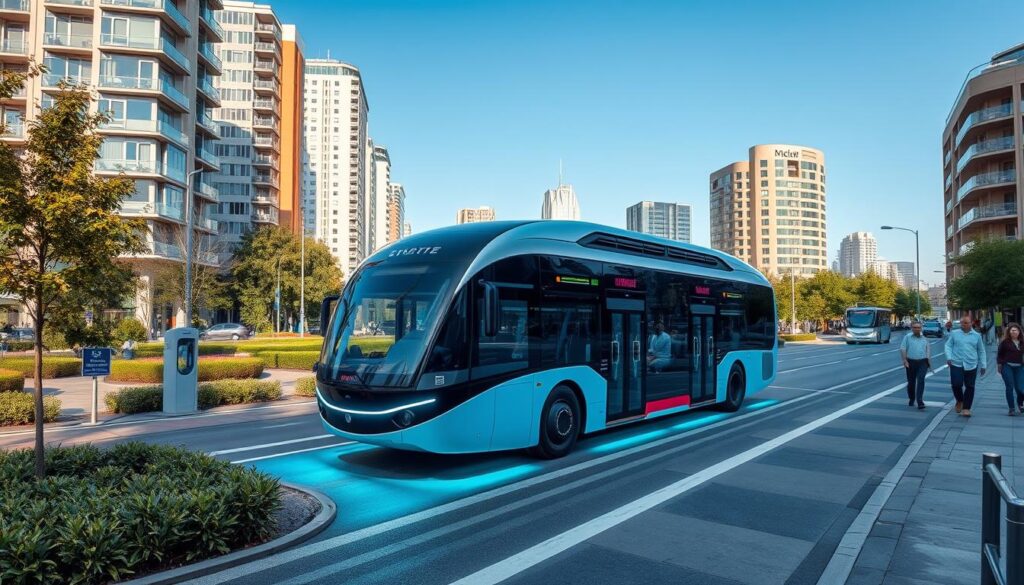
The electric bus technology is constantly evolving, with new advancements being made in battery innovations and charging systems. As the demand for electric buses continues to grow, it is likely that we will see even more innovative solutions in the future.
The electrification of mass transit is an important step towards reducing greenhouse gas emissions and improving air quality in urban areas.
Overall, the technology behind electric buses is playing a crucial role in the transition to a more sustainable and environmentally friendly public transportation system. With ongoing advancements in electric bus technology and battery innovations, we can expect to see even more efficient and effective electric buses on the roads in the future.
Cost Analysis: Electric vs. Traditional Buses
When considering the transition to electric buses, one of the critical factors is the electric bus cost. A thorough traditional bus comparison is necessary to understand the financial implications of this transition. The initial investment required for electric buses is typically higher, but they often present lower total costs of ownership due to savings on fuel and maintenance.
A key aspect of the cost analysis is the total cost of ownership, which includes the purchase price, maintenance costs, and fuel expenses. The average NPV for the baseline scenario is $785,000 over a 12-year bus life. The most influential and volatile project parameters include the purchase price of the electric bus, the purchase price of the foregone diesel bus, and the grant amount.
- Charger price (fast): High volatility
- Electric vehicle demand charges (fast): High volatility
- Number of electric buses obtained (fast): High volatility
The cost of electrical installation for a fleet of 300 electric buses with depot charging is estimated to be Can$91 million, while the total capital cost estimate is Can$446 million.
| Cost Component | Depot Charging | On-Route Opportunity Charging |
|---|---|---|
| Cost of electrical installation | Can$91 million | Can$160 million |
| Total capital cost estimate | Can$446 million | Can$465 million |
Charging Infrastructure and Range Capabilities
As the world shifts towards sustainable transportation, the importance of electric bus charging infrastructure cannot be overstated. With the increasing demand for electric buses, transit agencies must develop a comprehensive transition plan for electrification, including the development of range capabilities that meet the needs of their routes. According to the Center for Transportation and the Environment (CTE), agencies should consult with experts to evaluate charging options and develop a plan that suits their specific needs.
A key aspect of electric bus charging is the type of charging infrastructure used. There are several types of charging infrastructure, including Level 1, Level 2, and DC fast charging. Level 2 charging, which provides approximately 25 miles of range per hour, is the most common type of public electric bus charging infrastructure, with nearly 80% of public EV charging ports in the U.S. belonging to this category. DC fast charging, on the other hand, enables approximately 100 to 200+ miles of range per 30 minutes of charging, making it an ideal option for long-distance routes.
Transit agencies can find more information on electric car charging infrastructure and its applications in public transportation. By understanding the different types of charging infrastructure and their applications, agencies can make informed decisions about their electrification plans and develop effective range capabilities for their electric bus fleets.
Some of the key considerations for transit agencies when developing their electric bus charging infrastructure include:
- Conducting detailed energy modeling to determine the energy requirements of their routes
- Developing charging schedules that optimize energy use and minimize downtime
- Assessing operator behavior to ensure that drivers are using the charging infrastructure effectively
By taking a comprehensive approach to electric bus charging infrastructure and range capabilities, transit agencies can ensure a smooth transition to electric buses and provide reliable, sustainable transportation to their communities.
| Charging Type | Range per Hour | Percentage of Public Charging Ports |
|---|---|---|
| Level 1 | 5 miles | |
| Level 2 | 25 miles | 80% |
| DC Fast Charging | 100-200+ miles per 30 minutes | 20% |
Success Stories: Cities Leading the Electric Bus Revolution
Several cities around the world are leading the electric bus revolution, demonstrating how electric buses can be successfully integrated into public transit systems. One notable example is the Antelope Valley Transit Authority, which achieved the milestone of being the first transit agency in the U.S. to have a fully electrified fleet, accomplishing its zero-emission goal 18 years ahead of schedule.
The success of cities like Antelope Valley serves as a model for midsize cities across the U.S. to kickstart the electrification revolution. Other cities, such as Austin, Texas, and Seattle, are also noted as leaders in adopting battery-powered buses. The number of battery-electric transit buses (BEBs) in the U.S. grew by 112% from 2018 to 2021, based on data from Calstart. Some of the key electric bus success stories include:
- Antelope Valley Transit Authority operates 77 electric buses and ten electric microtransit vans.
- California leads the nation with almost 1,400 BEBs on the road or on order.
- More than 70 transit agencies in the U.S. have been assisted by the Center for Transportation and the Environment (CTE) in deploying electric buses.
These sustainable cities are paving the way for a cleaner, greener future. As the demand for electric buses continues to grow, it’s essential to learn from these success stories and apply them to other cities, creating a more sustainable and environmentally friendly public transportation system.
The table below summarizes some of the key statistics on electric bus adoption in the U.S.
| City/State | Number of Electric Buses | Goal for Electrification |
|---|---|---|
| Antelope Valley, CA | 77 | Already achieved |
| California | 1,400 | Ongoing |
| Austin, TX | Not specified | Leader in adoption |
Overcoming Implementation Challenges
Implementing electric bus systems poses several electric bus challenges, including the need for charging infrastructure, grid upgrades, and training for maintenance and operations personnel. To overcome these implementation barriers, cities can adopt a comprehensive approach that includes meticulous planning, innovative technologies, and strategic collaboration.
Some of the key considerations for public transit agencies include range anxiety, charging delays, and battery performance affected by weather conditions. For instance, yard management strategies can be employed to monitor buses and charging operations effectively. Additionally, transit authorities need to engage with utilities to understand electricity rates, demand charges, and infrastructure upgrades required for fleet electrification.
Driver retraining is essential to ensure drivers understand energy-efficient driving techniques specific to electric vehicles. Incompatibility issues between charging hardware and vehicles can cause damage or slowdown charging operations. To address these challenges, cities can leverage technology-driven solutions, such as intelligent route optimization, to enhance the efficiency of electric buses.
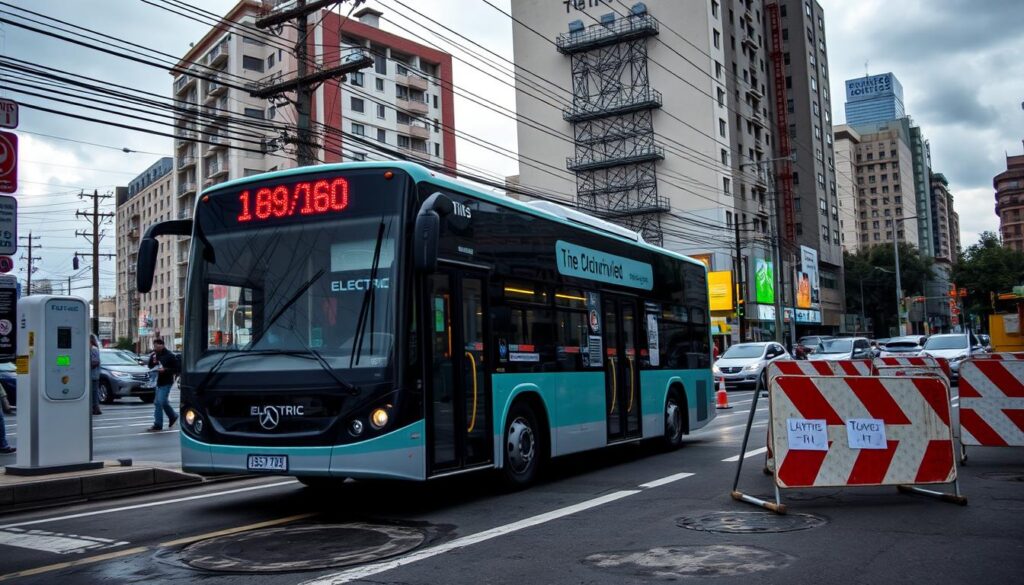
By adopting a proactive approach to electric bus challenges and implementation barriers, cities can successfully transition to electric bus systems, reducing their environmental impact and improving public transportation. As seen in cities like New York City and Denver, with careful planning and collaboration, the benefits of electric buses can be fully realized, making public transportation more sustainable and efficient.
Electric Buses in Public Transit Systems Today
The electric bus market is experiencing rapid growth, with an increasing number of cities adopting electric buses as part of their public transit systems. This growth is driven by the need to reduce greenhouse gas emissions and improve air quality in urban areas. In 2023, the EU27 + Norway, Iceland, and Switzerland reported over 6,354 registrations of electric buses, indicating a significant increase in demand for eco-friendly public transit options.
Public transit trends are shifting towards electric buses, with many cities investing in electric bus fleets. For example, Metro Transit in Minnesota has ordered several electric buses, including 20 40-foot battery electric buses and five 60-foot battery electric buses. These investments are expected to reduce transportation emissions and improve the overall sustainability of public transit systems.
Some key benefits of electric buses include:
- Zero tailpipe emissions, reducing air pollution in urban areas
- Lower operating costs, as electric buses are more energy-efficient than traditional diesel buses
- Reduced noise pollution, creating a more comfortable ride for passengers
The adoption of electric buses is expected to continue growing in the coming years, driven by government incentives and increasing demand for sustainable public transit options. As the electric bus market continues to evolve, we can expect to see new technologies and innovations emerge, further improving the efficiency and effectiveness of electric buses in public transit systems.
| Year | Number of Electric Bus Registrations |
|---|---|
| 2022 | 5,000 |
| 2023 | 6,354 |
| 2024 | 8,000 (projected) |
Future Innovations in Electric Bus Technology
The future of electric bus technology holds much promise, with ongoing research and development aimed at improving efficiency, range, and overall performance. As we look to the future, innovations in electric bus technology are expected to play a significant role in shaping the public transit landscape. One key area of focus is the development of advanced battery technologies, which will enable electric buses to travel longer distances without the need for recharging.
Some of the key future electric bus technology trends include the integration of regenerative braking systems, which recover energy during braking, and the implementation of real-time tracking and Wi-Fi connectivity to enhance the passenger experience. Additionally, governments around the world are offering incentives and funding programs to support the adoption of electric bus technology, recognizing the long-term cost savings and environmental benefits.
Some notable statistics highlighting the growth of the electric bus market include:
- In 2023, the European zero emission city bus market experienced a 45% growth, with Germany increasing by 19% in the first half of the year.
- The European e-bus market saw a remarkable 53% growth in registrations in 2023, with over 42% of city buses being zero-emission.
- By 2030, municipal buses are projected to exceed 60% of sales, reaching 83% by 2040.
As the demand for electric buses continues to grow, manufacturers such as MAN, Solaris, and Yutong are emerging as leaders in the market. With the global electric bus market expected to reach 670,000 units by 2027, it’s clear that future electric bus technology will play a vital role in shaping the future of public transportation. As innovations in electric bus technology continue to evolve, we can expect to see even more efficient, sustainable, and passenger-friendly vehicles on the roads.
| Year | European Zero Emission City Bus Market Growth | European E-Bus Market Registrations |
|---|---|---|
| 2023 | 45% | 53% |
| 2030 | – | 60% of sales |
| 2040 | – | 83% of sales |
The Role of Government Incentives and Policies
Government incentives and policies play a vital role in supporting the adoption of electric buses. The Biden administration has proposed a $174 billion program to bolster EVs in general, while two senior U.S. Senate Democrats have proposed spending $73 billion to electrify the nation’s 70,000 transit buses and other transit vehicles. These initiatives demonstrate the government’s commitment to promoting electric bus policies and providing government incentives for their adoption.
Some of the key government incentives and policies include the Advanced Technology Vehicle (ATV) and Alternative Fuel Infrastructure Manufacturing Incentives, Bus and Bus Facilities Grants, and Charging and Fueling Infrastructure Grants. These programs offer funding and support for the development and deployment of electric buses, as well as the construction of charging infrastructure. For example, the Federal Transit Administration (FTA) offers grants through the Buses and Bus Facilities Program for the replacement, rehabilitation, and purchase of buses, vans, and related equipment, including low or zero emission vehicles or facilities.
Additionally, states can use funding from the Carbon Reduction Program (CRP) to support activities like truck stop electrification, public transportation, and deploying alternative fuel vehicles as part of a carbon reduction strategy to reduce transportation emissions. The U.S. Department of Energy also provides grants for research and development related to electric vehicle charging infrastructure and alternative fuel vehicle technologies.
These government incentives and policies are crucial for encouraging the adoption of electric buses and reducing greenhouse gas emissions in the transportation sector. By providing financial support and regulatory frameworks that favor the use of electric vehicles, governments can help accelerate the transition to a more sustainable and environmentally friendly transportation system.
Conclusion: The Future of Green Public Transportation
As the world progresses towards a more sustainable future, the role of green public transportation becomes increasingly vital. The journey of electric buses, from their initial inception to their current state, serves as a testament to the unwavering commitment to sustainable mobility. This concluding section reflects on the remarkable advancements in electric bus technology and the significant impact they have had on urban transportation.
Ongoing breakthroughs in battery performance, charging infrastructure, and energy efficiency have transformed electric buses into a practical and cost-effective solution for public transit systems. With extended ranges, quicker charging times, and reduced maintenance expenses, these eco-friendly vehicles are poised to become the backbone of sustainable urban mobility. Moreover, the integration of innovative features, such as advanced safety systems and enhanced passenger comfort, has made electric buses an increasingly attractive option for both operators and commuters.
Looking ahead, the future of public transportation promises even greater strides in sustainability. As municipal bus fleets continue to electrify at a rapid pace, surpassing 60% of sales by 2030, the vision of a greener, cleaner, and quieter urban landscape becomes a tangible reality. With the support of government incentives and policies, the transition to green public transportation will only accelerate, paving the way for a future where sustainable mobility is the norm rather than the exception.
FAQ
What is the evolution of electric buses in public transportation?
What are the key factors driving the rise of electric buses in modern public transit?
What are the environmental benefits of electric buses compared to traditional bus systems?
How do electric buses transform urban transportation?
What is the current state of electric bus technology?
How do the costs of electric buses compare to traditional buses?
What are the considerations for charging infrastructure for electric bus operations?
What are some success stories of cities leading the electric bus revolution?
What are the key challenges in implementing electric bus systems?
What is the current state of the electric bus market?
What future innovations are expected in electric bus technology?
What is the role of government incentives and policies in supporting the transition to electric bus fleets?
