
Electric Transport IoT Charging Platforms for Urban Mobility
The adoption of IoT Charging Platforms for Urban Mobility represents the most significant shift in how modern cities manage energy demand and vehicle flow in 2026.
This technological convergence integrates cloud computing, real-time sensors, and electric vehicle (EV) infrastructure to eliminate the friction typically associated with public charging.
Understanding the architecture of these systems is vital for urban planners and EV owners alike. This guide explores the technical foundations and practical benefits of interconnected charging ecosystems that power our streets today.
What is the role of IoT in modern electric transport charging?
Internet of Things (IoT) serves as the central nervous system for electric transport.
By embedding smart sensors into charging stations, operators can monitor every kilowatt-hour delivered and detect hardware failures before they occur.
It is no longer about just “plugging in”; it’s about a constant dialogue between the machine and the cloud.
These platforms communicate directly with the vehicle’s Battery Management System (BMS).
This interaction ensures that the charging speed matches the battery’s health, temperature, and capacity. It’s a delicate dance that maximizes longevity while reducing the risk of overheating.
In the 2026 urban landscape, IoT Charging Platforms for Urban Mobility act as data hubs. They collect information on traffic patterns and peak usage times, allowing cities to distribute energy more efficiently across the metropolitan area.
There is something unsettling about how fragmented our early charging networks were—essentially blind sockets that offered no feedback to the grid.
How does smart charging optimize urban energy distribution?
Smart charging platforms utilize bidirectional communication to implement “Demand Response” strategies.
When the city grid reaches its peak capacity, the IoT system can temporarily throttle charging speeds. This isn’t a failure of the system, but a sophisticated way to protect the electrical infrastructure.
This prevents the need for costly grid upgrades while ensuring that essential services remain powered.
High-density residential zones benefit most from this, as hundreds of vehicles can charge overnight without overwhelming the local transformers.
Cities are increasingly adopting Vehicle-to-Grid (V2G) technology. This allows EVs to act as mobile batteries, feeding electricity back into the grid during emergencies.
It turns a fleet of cars into a resilient, decentralized power plant—a concept that was often maligned as science fiction but is now a structural necessity.
For detailed technical specifications on global charging protocols and infrastructure standards, the International Energy Agency (IEA) provides extensive reports on the current state of electric mobility and energy policy.
Key Performance Metrics for Urban IoT Charging (2026)
| Feature | Description | Impact on Urban Mobility |
| Uptime Reliability | Percentage of operational time for stations. | Reduces “charger anxiety” for daily commuters. |
| Latency | Time taken for data sync between app and charger. | Ensures seamless start/stop and payment. |
| Load Balancing | Real-time power distribution across ports. | Allows more cars to charge on limited power. |
| Predictive Maintenance | AI-driven hardware health monitoring. | Decreases physical repair costs and downtime. |
| Interoperability | Support for various vehicle brands and plugs. | Creates a unified network for all city users. |
Why are interconnected charging networks essential for fleet management?
Commercial fleets, including electric buses and delivery vans, require precise scheduling to remain profitable.

Interconnected networks allow fleet managers to reserve charging slots and monitor the energy consumption of every vehicle remotely, in real-time.
Learn more: What Real Fleet Data Reveals About Maintenance Savings in Electric Trucks
Manual logging is a thing of the past. IoT Charging Platforms for Urban Mobility automate the entire accounting process.
They provide detailed reports on energy costs per mile, which is essential for corporate sustainability audits in 2026.
This connectivity solves the old problem of “dead zones” in cities where commercial vehicles couldn’t operate reliably.
By having a birds-eye view of the network, fleet operators can reroute vehicles to available chargers before a battery ever hits the critical zone.
Which communication protocols power these charging platforms?
Modern platforms rely on the Open Charge Point Protocol (OCPP) to ensure that hardware from different manufacturers can talk to the same management software.
This prevents “vendor lock-in,” a trap that early adopters often fell into.
Read more: The Hidden Weak Point in Electric Transport: Depot-Level Energy Management Systems (EMS)
In addition to OCPP, ISO 15118 enables “Plug & Charge” functionality. This protocol handles authentication and billing automatically the moment the cable is connected.
It finally removes the need for physical RFID cards or clunky mobile apps that never seem to load when you’re in a hurry.
Security is another critical layer. Encryption at the edge ensures that payment data and vehicle identification remain private.
Protecting users from the growing threat of cyber-attacks on public infrastructure is now as important as the electricity itself.
What are the main challenges for IoT charging in high-density areas?
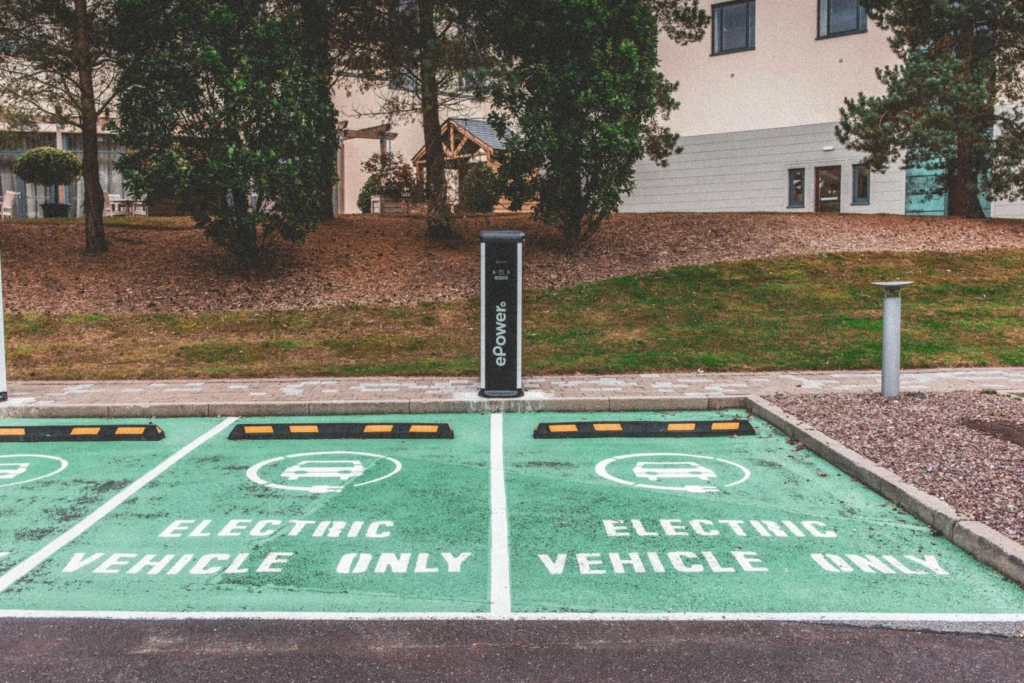
Space is the ultimate luxury in 2026 megacities. Installing enough physical chargers to meet demand requires clever integration into existing street furniture, such as lamp posts and curbside parking sensors, to minimize urban clutter.
Learn more: Electric Transport Battery Swapping Scaling in Cities
Data congestion also poses a risk. With thousands of devices communicating simultaneously, the network must be robust enough to handle high volumes of traffic.
A dropout isn’t just an inconvenience; it could interrupt a vital charging session for an emergency vehicle.
Standardizing user experiences across different municipal borders remains difficult. A driver moving between neighboring cities should ideally use a single account, yet administrative hurdles often slow down the creation of truly universal networks.
This is often maligned as a technical issue, but it is purely a bureaucratic one.
For a deeper look into the standards of wireless communication and IoT security protocols, the Institute of Electrical and Electronics Engineers (IEEE) offers peer-reviewed journals on the latest advancements in smart city technology.
FAQ: Navigating Urban IoT Charging
Do I need a special app for every charging brand?
Ideally, no. The industry is moving toward “Roaming” agreements, similar to cellular networks. This allows you to use your preferred app at almost any station, regardless of who owns the physical hardware.
How does weather affect IoT charging stations?
Modern IoT units are rated for extreme temperatures. Sensors inside the housing monitor for moisture or heat spikes, automatically shutting down the unit to prevent hardware damage.
Is my vehicle’s data shared with the city?
Most platforms only share anonymized energy usage data. While the city sees when and where charging happens to plan infrastructure, your personal identity and specific driving routes remain encrypted.
The evolution of IoT Charging Platforms for Urban Mobility has turned the dream of a quiet, emission-free city into a functional reality.
By bridging the gap between the power grid and the pavement, these systems ensure that electric transport is not just a luxury, but a reliable utility for everyone.
The transparency provided by IoT data empowers users and municipalities to make smarter, greener choices every day.
As we move further into 2026, the continued refinement of these networks will be the cornerstone of sustainable growth.
Investing in these digital infrastructures today guarantees a more resilient and mobile society. Leveraging technology to solve physical problems is the hallmark of modern urbanism.
