
Community battery banks: the new model preventing blackouts in coastal regions
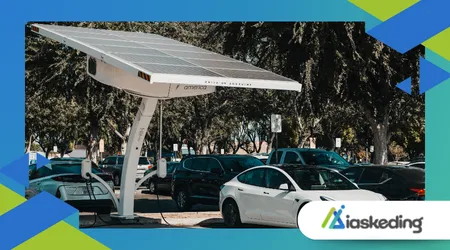
Community battery banks are quietly dismantling the old, fragile hierarchy of centralized power, offering coastal towns a fighting chance against a climate that has grown increasingly unpredictable.
This shift isn’t just about storage; it’s about redrawing the lines of energy sovereignty at the neighborhood level.
Summary
- Unpacking the mechanics of neighborhood-scale energy storage.
- Why coastal geography demands a decentralized response.
- The economic friction between individual and shared assets.
- Real-world performance metrics from the 2026 cycle.
- Moving beyond the “grid-down” anxiety toward total reliability.
What is a Community Battery Bank?
Imagine a shipping container-sized unit tucked discreetly behind a local library or inside a parking lot.
This is a community battery bank, a shared reservoir typically holding between 100kWh and 5MWh of energy.
Unlike a private battery bolted to a garage wall, these systems live “front-of-the-meter,” serving as a communal lung that breathes energy in and out for the entire street.
It’s a design that finally solves the “renter’s dilemma.” You don’t need to own a roof or a solar array to benefit from renewable stability.
By pooling local generation, these systems stabilize voltage drops that often plague the ends of distribution lines, turning a cluster of houses into a self-balancing ecosystem.
Modern units in 2026 have moved toward sodium-ion and LFP chemistries. These aren’t just technical choices; they are safety imperatives.
In the salt-heavy air of the coast, thermal stability and non-combustibility are the only metrics that truly matter when the equipment sits so close to where people live.

Why are Coastal Regions Adopting Community Battery Banks?
Coastal living has always been a gamble against the elements, but the stakes have changed.
Salt-mist corrosion eats traditional transformers from the inside out, while seasonal hurricanes turn overhead lines into liabilities.
++How “Smart Charging Clusters” Are Reducing Grid Peaks in High-Density Urban Areas
Community battery banks offer a way to “island”—to sever ties with a failing main grid and keep the neighborhood lights on.
There is a subtle but vital social shift happening here. When a storm hits, the traditional grid usually fails the most remote areas first.
Local storage flips this script. It provides a buffer for essential infrastructure, like local water filtration and medical clinics, ensuring that a downed tree three towns away doesn’t paralyze an entire coastline.
Space is the final frontier in these regions. You cannot easily permit a massive solar farm on a high-value beachhead.
Read more: Why solid-state batteries are delayed — and how it impacts renewable expansion
Small, modular community battery banks bypass this by fitting into the “cracks” of the existing urban landscape, providing high-density power without the need for massive land clearing or controversial zoning battles.
How do Community Battery Banks Prevent Blackouts?
Blackouts are rarely sudden catastrophes; they are usually the result of a “peak” that simply pushes a tired transformer too far.
When everyone’s HVAC kicks in on a humid Tuesday, community battery banks inject power locally. This prevents the hardware from overheating, effectively “lopping” the peak before it can trigger a circuit trip.
This isn’t just a reactive process anymore. By 2026, AI-driven forecasting has become the standard, predicting spikes by analyzing hyper-local humidity and temperature sensors.
++Solar tandem cells surpassing 30% efficiency: what this breakthrough means for the industry
The battery doesn’t just wait for a failure; it prepares the local grid for the incoming strain hours before the thermostat even moves.
Which Economic Models Support Shared Storage?
The math behind these installations relies on “value stacking,” a fancy way of saying the battery wears many hats.
It makes money by balancing grid frequency, participating in demand-response markets, and buying energy when it’s cheap to sell when it’s expensive.
This revenue is what makes the subscription model work for residents.
For most homeowners, a private battery is a luxury that takes a decade to pay off.
A community model changes that. It allows residents to pay a modest fee—often offset by utility credits—to access backup power.
++Unlocking the Value of Community-Scale Storage for Consumers
It’s the difference between buying a private jet and having a very reliable bus route.
Investors are also pivoting here because centralized maintenance is far cheaper than servicing five hundred individual home units.
A single professional crew can maintain a 2MWh community battery bank, ensuring the hardware actually reaches its 15-year lifespan rather than dying prematurely due to poor homeowner upkeep.
Data Analysis: Performance in Coastal Grids (2025-2026)
| Metric | Individual Home Battery | Community Battery Bank |
| Avg. Cost per kWh | $850 – $1,100 | $450 – $600 |
| Round-Trip Efficiency | 85-90% | 92-95% |
| Maintenance Frequency | User Dependent | Professional/Remote |
| Grid Support Services | Limited | Full (FR/Voltage Control) |
| Coastal Resilience | Low (Single Point) | High (Redundant Nodes) |
What are the Technical Challenges for Coastal Deployment?
Building electronics next to the ocean is a constant battle against chemistry. Salt air is conductive and corrosive, a nightmare for high-voltage systems.
As a result, 2026-spec community battery banks are now housed in IP66-rated, hermetically sealed enclosures that treat the internal environment like a clean room.
Heat management is the other silent killer. Coastal heatwaves are rarely dry; the humidity makes passive air cooling almost useless.
Modern systems use closed-loop liquid cooling to keep cells at a steady temperature. This prevents the “thermal throttling” that used to make older batteries fail exactly when the grid needed them most.
Security has also had to evolve. These nodes are controlled by software, which makes them potential targets.
The shift toward “zero-trust” architecture means that even if the main utility’s central hub is compromised, the local community battery banks can lock down and continue operating in an autonomous, “blind” mode to protect the neighborhood.
The Shift in Regional Reliability
We are moving away from a “fail-safe” mentality, which assumes the grid can be made unbreakable, toward a “safe-to-fail” strategy.
If a major transmission tower collapses, a network of community battery banks allows the region to fragment into functional islands. The lights stay on, even if the “grid” as we know it is temporarily gone.
This redundancy is the hallmark of a mature, resilient coastal energy strategy. It acknowledges that while we cannot stop the storms, we can certainly stop being paralyzed by them.
As battery technology moves toward even safer, longer-lasting solid-state designs, the neighborhood battery will likely become as common—and as essential—as the fire hydrant.
The future of the coast isn’t just about building higher sea walls; it’s about building smarter, more stubborn power systems.
For a deeper look at the safety standards governing these local hubs, consult the Department of Energy’s Office of Electricity.
FAQ
What is the physical size of a community battery?
Most installations fit within the footprint of two standard parking spots. They are designed to be unobtrusive, often disguised with landscaping or architectural cladding to match the neighborhood.
Does the battery make noise at night?
No. Unlike older generators, these use liquid cooling pumps that are virtually silent. You would likely hear the rustle of leaves over the hum of the battery from ten feet away.
Can I still use the battery if I don’t have solar panels?
Absolutely. The system can charge from the grid during off-peak hours when power is cheap and clean, then discharge that power to the whole neighborhood during expensive peak times.
How does this affect my monthly power bill?
Most participants see a reduction in their “peak” charges. While the exact savings vary by utility, the primary benefit is the avoidance of costly “demand charges” and the security of backup power.
