
Vehicle-to-Grid (V2G) & smart charging: turning electric transport into an energy asset
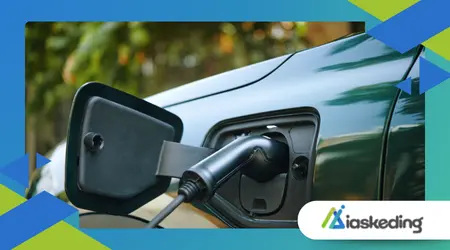
The electric vehicle revolution represents more than a shift in transportation; it heralds a fundamental change in our energy landscape.
Today, the convergence of electric mobility and smart energy systems offers a transformative opportunity.
The synergy of Vehicle-to-Grid (V2G) & smart charging is rapidly positioning electric transport not merely as a sustainable consumption point but as a crucial, flexible energy asset essential for grid stability and the integration of renewable power.
This is the moment when millions of parked cars start working for the grid, shaping a resilient, decentralized power future.
What is Vehicle-to-Grid (V2G) & smart charging and How Does it Work?
Understanding the difference between traditional, unmanaged EV charging and its intelligent counterpart is vital.
Traditional charging simply draws power when plugged in, often coinciding with peak grid demand. Smart charging, however, optimizes the charging process.
It uses data from the grid, electricity prices, and user needs to determine the best time and rate to charge.
This intelligent coordination ensures that vehicles primarily draw power during periods of low demand or high renewable generation, reducing strain on the existing infrastructure.
Vehicle-to-Grid (V2G) takes this concept a giant step further.
V2G is the technology enabling bi-directional energy flow, meaning an electric vehicle can both draw power from and send stored power back to the electrical grid.
Essentially, the EV’s battery transforms into a mobile, controllable energy storage unit.
Read more: What Are Microgrids and Why They Matter
This is achieved through a bi-directional charger and sophisticated software platforms that manage the energy exchange based on real-time grid signals.
The vehicle becomes an active participant in the energy market.
How Can Electric Vehicles Stabilize the Energy Grid?
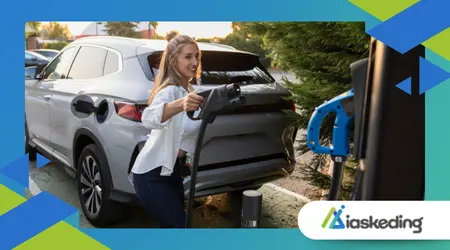
Electric vehicles, collectively, possess immense energy storage potential, a key requirement for a grid increasingly reliant on intermittent renewables like solar and wind.
++What Makes an Electric Train “Green”?
Imagine a scenario where a sudden cloud bank reduces solar generation. Traditionally, a power plant would need to quickly ramp up.
With V2G, the grid can instead issue a signal, prompting thousands of parked EVs to discharge a small amount of stored energy back into the system for a few minutes.
This immediate, localized response effectively smooths out grid fluctuations.
This capability is akin to an enormous, distributed Virtual Power Plant (VPP).
Rather than building massive, centralized batteries, V2G harnesses the power already sitting in driveways and corporate parking lots.
Consider a commercial fleet of 50 electric delivery vans, each with a 75 kWh battery. That single fleet represents $3,750$ kWh of available storage capacity.
++How to Start an E-Bike Delivery Business
When these vehicles are parked overnight or during the day, this capacity is available to provide services like frequency regulation or peak shaving, earning revenue for the fleet owner.
What are the Economic and Environmental Advantages of V2G?
The financial incentives for V2G deployment are becoming increasingly compelling for multiple stakeholders.
For electric vehicle owners, participating in a V2G program can significantly offset the cost of vehicle ownership.
By selling energy back to the grid during high-price peak hours, participants can earn income. .
Beyond individual savings, the environmental benefit is monumental.
++Smart-charging and V2G critical for cost savings, grid stability and renewables integration
By absorbing surplus renewable energy when generation is high (for example, midday solar peaks) and discharging it when clean power is scarce, V2G ensures fewer clean megawatts are wasted and reduces the need to fire up fossil fuel ‘peaker’ plants.
When the grid gets cleaner, the act of charging also becomes carbon-negative because V2G incentivizes a greater investment in renewable infrastructure.
Does the future of energy lie in decentralized mobile assets rather than enormous, stationary power stations?
Where is Vehicle-to-Grid (V2G) & smart charging Being Deployed Today?
Globally, pilot projects are rapidly transitioning into scalable commercial deployments, solidifying the technology’s readiness.
A key example is the ongoing effort in the Netherlands, where cities are actively integrating V2G-compatible charging infrastructure.
Their goal is to roll out grid-friendly charging nationally by 2025. Another compelling example comes from the United States, focusing on fleet applications.
Electric school buses, with their large batteries and predictable schedules—parked when children are not being transported—are ideal V2G assets.
The integration of electric school bus fleets with V2G technology has the capacity to double the V2X market to $40$ megawatts by 2025, according to a recent report by Wood Mackenzie.
This demonstrates how commercial fleets are leading the charge.
A growing number of automakers are now releasing new models with bi-directional capability, realizing the value proposition.
Standards like ISO $15118-20$ are paving the way for seamless communication between the vehicle and the grid, moving Vehicle-to-Grid (V2G) & smart charging from a niche concept to a mainstream reality.
The market for V2G is expected to rise from $\$4.28$ billion in 2025 to over $\$15$ billion by 2030, showing aggressive growth.
The table below illustrates the dual services EV batteries provide when integrated with Vehicle-to-Grid (V2G) & smart charging:
| V2G Service | Description | Grid Benefit |
| Peak Shaving | Discharging power during peak demand to lower the overall consumption peak. | Reduces infrastructure stress and operating costs. |
| Frequency Regulation | Rapidly absorbing or injecting small amounts of power to maintain grid stability. | Ensures the quality and reliability of electricity supply. |
| Renewable Integration | Storing excess power from solar or wind generation and releasing it later. | Maximizes the use of clean energy sources. |
Vehicle-to-Grid (V2G) & smart charging: Conclusion
The move toward Vehicle-to-Grid (V2G) & smart charging transforms a fleet of individual energy consumers into a dynamic, interconnected collective asset.
Just as individual drops of water form a powerful river, millions of EV batteries, connected intelligently, create a flexible energy reservoir capable of balancing the demands of a modern, electric society.
This is the sophisticated, high-value function of electric transport in the coming decades.
The future of electric transport is not simply about replacing the combustion engine; it is about merging the automotive sector with the energy sector.
Frequently Asked Questions: Vehicle-to-Grid (V2G) & smart charging
Q: Does V2G damage my EV battery?
A: Reputable, modern V2G systems employ sophisticated software to manage charging and discharging cycles within optimal parameters.
They typically use a minimal portion of the battery’s capacity for grid services, specifically to avoid causing significant degradation.
Many manufacturers are now providing specific warranties that cover V2G participation, indicating confidence in the technology’s minimal impact.
Q: Which electric vehicles currently support V2G?
A: Historically, models using the CHAdeMO charging standard (like the Nissan Leaf) were early adopters.
However, new global standards like ISO 15118-20 are rapidly being adopted by major manufacturers (including Ford, Volkswagen, and Polestar) for new models.
Compatibility is quickly becoming a standard feature for EVs released from 2024 onwards.
Q: Do I need a special charger for V2G?
A: Yes. V2G requires a bi-directional charger, which is capable of converting power for both drawing electricity from and sending electricity back to the grid.
Standard home chargers are typically one-way (unidirectional). Bi-directional chargers are now becoming more widely available for residential and commercial use.
