
Why Electric Ferries Need More Than Just Big Batteries — The Port Bottleneck Problem
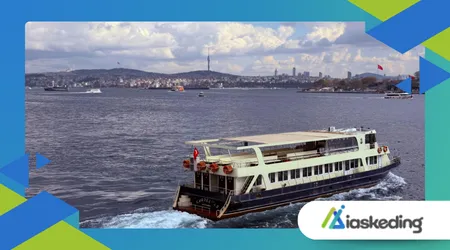
Electric Ferries Need More Than Just Big Batteries to revolutionize maritime transport, as the true challenge lies within the aging infrastructure of our global port systems and energy grids.
Naval architects have largely mastered high-density lithium-ion storage, yet the transition frequently stalls the moment a ship hits the pier.
Most harbors remain relics of the diesel era, designed for liquid bunkering rather than massive electrical draws.
There is a recurring oversight in the industry: Electric Ferries Need More Than Just Big Batteries. A single commuter ferry often demands a 5-megawatt burst in a ten-minute window to stay on schedule.
Local utility grids rarely possess the “headroom” to support such violent spikes in demand.
Consequently, the bottleneck simply migrates from the ship’s engine room to the city’s high-voltage transformer stations, creating a hidden crisis.
Summary of Insights
- The gap between vessel capacity and onshore power.
- Grid constraints and the demand for rapid charging.
- The role of Megawatt Charging Systems (MCS).
- Economic hurdles in port electrification projects.
- Future-proofing docks for a hybrid fleet.
What Are the Technical Requirements for High-Speed Ferry Charging?

Standard industrial plugs are laughably inadequate for the thermal loads required in heavy maritime operations.
Engineers are now forced to pivot toward the Megawatt Charging System (MCS) to bridge this specific, and often ignored, energy gap.
Reliability at the waterline remains a primary concern for port authorities globally.
Automated vacuum or robotic arm systems must engage the second a ship docks to claw back every possible moment of turnaround time.
Without these seamless interfaces, the inherent efficiency of an electric powertrain is wasted.
In the maritime world, charging speed functions as a hard currency, dictating whether a route remains profitable or turns into a liability.
How Does Grid Instability Impact Maritime Electrification?
Utilities often struggle to provide consistent high-voltage power to vulnerable coastal areas.
++Carbon Footprint Gap Between LFP and NMC Batteries
In many historic port cities, the existing cables beneath the streets lack the physical capacity to carry current for heavy-duty marine applications.
This technical reality proves that Electric Ferries Need More Than Just Big Batteries; they require a total synchronization with the municipal energy network to ensure any semblance of operational reliability.
Engineers are currently deploying “buffer” solutions, such as massive stationary battery storage units at the docks.
These shoreside banks slowly sip power from the grid and discharge it rapidly when the vessel actually arrives.
| Feature | Standard Marine Diesel | Electric Ferry System | Port Infrastructure Requirement |
| Power Source | Onboard Fuel Tanks | Battery Racks | High-Voltage Grid Connection |
| Refueling Time | 30–60 Minutes | 10–20 Minutes (Rapid) | Megawatt Charging Interface |
| Energy Storage | Chemical (Liquid) | Electrochemical (Lithium) | Shoreside Energy Storage (BESS) |
| Environmental Impact | High CO2/NOx | Zero Local Emissions | Requires Renewable Sourcing |
Which Economic Factors Are Delaying the Port Transition?
The capital expenditure required for a single electrified berth can easily exceed tens of millions of dollars.
Explore more: Electric Trolleybuses Are Making a Comeback in Cities Without Overhead Wires
Private operators understandably hesitate to commit when the long-term regulatory framework feels like it is in constant flux.
Public-private partnerships have become the uncomfortable necessity for overcoming these financial hurdles.
Governments must subsidize the “last mile” of electrical infrastructure to make zero-emission routes commercially viable for smaller, independent ferry lines.
Maintenance costs also undergo a radical shift from mechanical engine repairs to complex software management.
++What Are Electric Ferries and How Do They Work?
Transitioning the workforce requires an immediate investment in retraining traditional marine engineers who are used to wrenches, not code.
What Is the Role of Hydrogen and Hybrid Systems in This Gap?
For longer coastal routes, pure battery power eventually hits the wall of diminishing returns regarding weight.
Hydrogen fuel cells are emerging as a vital partner for vessels traveling beyond fifty nautical miles.
Integrating multiple fuel types requires a far more versatile approach to port design.
Modern terminals must support liquid hydrogen bunkering alongside rapid electric charging to accommodate the fragmented fleet of the next decade.
Recent industry data from the International Energy Agency (IEA) suggests that maritime decarbonization depends on a mosaic of energy carriers rather than a single, idealized “silver bullet” solution.
Why Should Cities Prioritize Shore Power (Cold Ironing)?
Removing at-berth emissions offers an immediate, tangible improvement to the air quality of dense urban neighborhoods.
Shore power allows massive ships to kill their auxiliary engines while loading and unloading passengers.
This shift significantly dampens noise pollution, a constant friction point in growing coastal metropolises.
Beyond the ferry itself, the entire harbor ecosystem breathes easier when localized exhaust fumes are removed from the equation.
However, scaling “cold ironing” requires a level of standardization that the industry hasn’t quite reached yet.
Different ships often operate on clashing electrical standards, necessitating expensive and bulky onboard conversion hardware.
How Can Digital Twins Optimize Charging Schedules?
Artificial Intelligence is starting to manage the complex, high-stakes dance of energy demand.
Digital twins of ports allow operators to simulate charging cycles based on shifting variables like weather, tide, and passenger loads.
By predicting energy peaks before they happen, ports can negotiate more favorable rates with utility providers.
This software layer confirms that Electric Ferries Need More Than Just Big Batteries to operate within a competitive margin.
Real-time data prevents the grid from buckling during the height of the tourist season. Smart charging algorithms ensure that every vessel in the fleet receives exactly the energy required for its next leg.
The maritime industry has reached a point where vessel technology has simply outpaced its land-based support systems.
We have built the ships of the future, but we are trying to run them on the “gas stations” of the past.
Building a sustainable fleet demands a holistic view of the entire energy supply chain.
From the inland substation to the ship’s hull, every link must be reinforced to handle the sheer magnitude of the electric load.
True progress will not be found in the size of the battery on the boat, but in the capability of the cable on the dock. Moving forward requires us to stop looking at the ship in isolation.
For a deeper look into the evolving technical specifications of global maritime standards, the International Maritime Organization provides the current framework for greenhouse gas reduction strategies.
FAQ
Why can’t ferries just charge like electric cars?
The scale is fundamentally different; ferries require thousands of times more energy than a car in a fraction of the time, demanding specialized high-voltage infrastructure.
Does the grid have enough power for all ferries?
Not yet. Most local grids require substantial upgrades or on-site battery buffers to manage the load without compromising power delivery to the surrounding city.
What happens if the power goes out at the port?
Redundancy is key. Most vessels carry enough reserve capacity for safety maneuvers, but ports are increasingly installing their own localized energy storage to ensure continuity.
Is charging more expensive than diesel?
The upfront infrastructure is steep, but the operational cost per mile is significantly lower once the system is live, especially when paired with smart grid management.
How long do ferry batteries last?
Marine-grade batteries are built for intense cycling and typically serve for 8 to 10 years before they are repurposed for less demanding land-based energy storage roles.
