
The Hidden Inefficiencies in EV Charging — From Cable Resistance to Inverter Losses
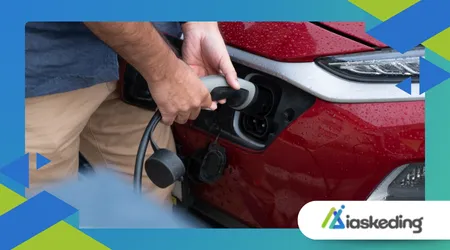
Hidden Inefficiencies in EV Charging represent a critical hurdle for the automotive industry as we move toward a carbon-neutral future in 2026. Understanding these losses is vital for every driver.
When you plug in your vehicle, the energy metered at the station never fully reaches the battery cells. This discrepancy occurs because electricity encounters physical resistance within the conductor materials.
It is a quiet tax on your wallet that most manufacturers rarely highlight in their marketing brochures.
Electrons moving through copper or aluminum wiring generate heat, a process known as Joule heating. This thermal dissipation represents a direct loss of paid energy that evaporates into the atmosphere.
You are essentially paying to warm the air around your driveway rather than powering your commute.
Modern electric vehicles face additional burdens from onboard computer systems and thermal regulation.
To protect the battery’s longevity, the car must often run cooling pumps or heaters during the session. These systems are non-negotiable for safety but act as a persistent drain on charging speed.
Summary
- The fundamental physics of energy transfer and heat generation.
- The significant role of cable resistance and thermal management.
- How AC/DC conversion impacts your overall home charging costs.
- Advanced battery chemistry challenges and power electronic losses.
- Actionable strategies to minimize energy waste during daily use.
How Does Cable Resistance Impact Hidden Inefficiencies in EV Charging?
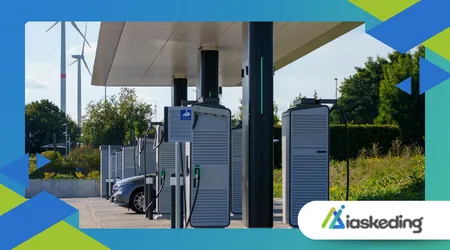
Cable resistance is an often overlooked factor that scales with the square of the current flowing through the system. High-power DC fast chargers require liquid-cooled cables to manage this heat.
There is something almost counterintuitive about using energy to cool the very equipment delivering energy.
While liquid cooling prevents the hardware from melting, it requires energy to operate the pumps. This creates a secondary layer of Hidden Inefficiencies in EV Charging that consumers rarely calculate.
It is a classic engineering trade-off: speed at the cost of thermodynamic waste.
At home, using thin or excessively long extension cords increases resistance significantly. Lower voltage drops across the line mean more energy is sacrificed to heat before reaching the vehicle’s port.
It is the electrical equivalent of trying to fill a bucket with a leaky garden hose.
Professionals recommend dedicated circuits with high-gauge wiring to mitigate these specific losses.
Reducing the distance between the breaker panel and the wall connector remains the most effective physical optimization strategy.
++Electric Motorcycle Torque Control on Wet Asphalt Roads
It is an upfront structural fix that pays dividends every single night the car is plugged in.
Why Do Inverter and Rectifier Losses Occur in Electric Cars?
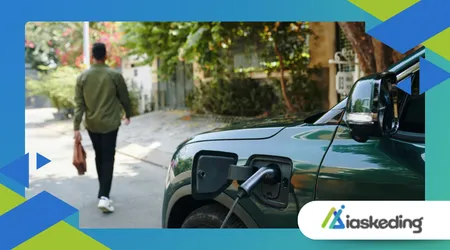
Electric vehicle batteries store energy as Direct Current (DC), but the power grid supplies Alternating Current (AC).
The conversion process requires an onboard charger to rectify the incoming electrical flow. This “translation” of power is where a significant chunk of efficiency simply vanishes.
Power electronics, specifically Insulated-Gate Bipolar Transistors (IGBTs), are not 100% efficient during switching. Each cycle of conversion results in a small percentage of energy being lost as thermal radiation.
It is a physical limitation of our current semiconductors that even the best engineering cannot fully bypass.
High-end silicon carbide (SiC) inverters have improved efficiency in 2026, yet they still face limitations.
++How Ambient Temperature Swings Cause Micro-Cracks Inside EV Cells Over Time
These components manage high voltages, and their performance degrades as internal operating temperatures begin to rise.
Heat is the enemy of efficiency, creating a feedback loop that slows down the entire system.
Efficiency usually peaks at specific load percentages, meaning slow “trickle” charging might actually be less efficient.
Onboard chargers often operate poorly at very low currents compared to their rated maximum capacity. It is a misunderstood reality: slower isn’t always better for the planet or your bill.
Which Environmental Factors Worsen Battery Charging Inefficiency?
Temperature plays a dominant role in how effectively a lithium-ion or solid-state battery accepts a charge. Cold weather increases internal resistance, making it harder for ions to move between electrodes.
The battery essentially becomes “stiff,” requiring more force—and more energy—to accept the same amount of power.
In extreme cold, the vehicle must divert energy to internal heaters to warm the pack. This “pre-conditioning” phase uses electricity that the owner pays for but never uses for actual driving.
++The Role of Vehicle-to-Grid (V2G) Technology in Everyday Use
You are effectively paying a premium just to get the battery into a functional state before the real work begins.
Conversely, high ambient heat triggers powerful cooling fans and refrigerant compressors.
These components prevent thermal runaway but introduce significant Hidden Inefficiencies in EV Charging by consuming the incoming power.
The car fights against the sun to keep its internal chemistry stable.
Recent data suggests that charging in a temperate garage can save up to 12% in energy costs. Managing the environment is just as important as choosing the right charging hardware for efficiency.
A little bit of shade or insulation can be more effective than a software patch.
Comparison of Charging Efficiency by Method (2026 Data)
| Charging Type | Typical Efficiency | Primary Loss Factor | Cost Impact |
| Level 1 (120V) | 75% – 82% | Onboard Electronics | Highest |
| Level 2 (240V) | 88% – 94% | Heat / Resistance | Low |
| DC Fast Charge | 90% – 97% | Cooling Systems | Medium |
| Wireless Inductive | 80% – 85% | Magnetic Flux | High |
How Does Battery Chemistry Affect Energy Retention and Waste?
The internal chemistry of the battery determines how much energy is lost through “hysteresis” during the cycle.
Chemical reactions within the cells are never perfectly reversible, leading to minor energy dissipation. It is the tax nature collects for moving energy from one state to another.
As batteries age, their internal resistance naturally grows due to the buildup of the solid electrolyte interphase.
Explore more: EV Charging Efficiency
This means older EVs actually become more expensive to charge over their lifetime. The car you bought three years ago might be thirstier at the plug today than it was on day one.
Furthermore, the “State of Charge” (SoC) influences efficiency, as charging the final 20% requires higher precision.
This phase is typically slower and generates more heat relative to the energy stored. Forcing those last few electrons into a nearly full battery is where the most waste occurs.
What are the Costs of Long-Term Charging Inefficiency?
If a vehicle loses 15% of its energy during every session, the cumulative financial impact is substantial. Over five years, an average driver might waste thousands of kilowatt-hours on simple heat.
This is energy that contributes nothing to your range but everything to your utility bill.
These Hidden Inefficiencies in EV Charging also place unnecessary strain on the local electrical grid.
Wasted energy still requires generation from power plants, which might increase the carbon footprint of the vehicle.
Efficiency is not just a financial concern; it is a fundamental pillar of the sustainability argument.
Smart charging software is now being developed to optimize the “sweet spot” of the power curve.
By aligning charging speeds with the inverter’s peak efficiency, drivers can reduce their total energy overhead. The industry is finally realizing that raw speed is less important than sustained, clean delivery.
Investing in high-quality home equipment is generally more cost-effective than using basic portable cables.
The initial hardware expense is often offset by the reduction in monthly electrical waste over time. It is a classic case of paying now to avoid leaking money for years to come.
The Path Forward
Maximizing the potential of electric mobility requires a transition from simply “filling up” to charging with precision.
By identifying Hidden Inefficiencies in EV Charging, drivers can significantly lower their operating costs. From upgrading home wiring to managing thermal conditions, small changes lead to major gains.
As technology improves in 2026, awareness remains the most powerful tool for efficiency. Understanding the physics behind the plug ensures that every cent spent on electricity translates into miles on the road.
FAQ (Frequently Asked Questions)
1. Is it better to charge my EV slowly or quickly for efficiency?
Level 2 charging (240V) is generally the most efficient for daily use. Level 1 is too slow, keeping onboard computers active longer, while DC fast charging requires energy-intensive cooling.
2. How much energy is typically lost in the charging process?
Most EVs lose between 10% and 20% of the energy drawn from the grid. This varies based on the charger type, the vehicle’s onboard inverter quality, and the ambient temperature.
3. Does the length of the charging cable matter?
Yes, longer cables have higher electrical resistance, which converts more energy into heat. Keeping the cable as short and thick as possible reduces these specific transmission losses.
4. Why does my car’s fan run while it is charging?
The fan is part of the thermal management system designed to keep the battery and inverter cool. This consumes energy but is necessary to prevent hardware damage and maintain safety.
5. Can software updates improve my charging efficiency?
Manufacturers often release updates that optimize the charging algorithm and thermal management logic. These improvements can reduce Hidden Inefficiencies in EV Charging by managing power electronics more effectively.
For more information on global standards and the future of electric transport, visit the International Energy Agency (IEA), which tracks infrastructure efficiency trends.
