
Safety Risks of Low-Voltage EVs (48V Systems)
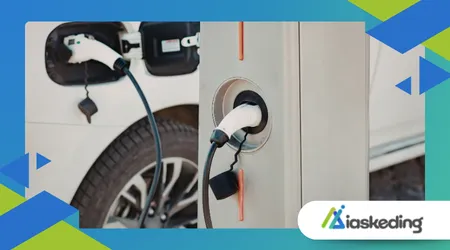
The automotive industry’s shift towards 48V systems marks a pivotal evolution in vehicle electrification, blending efficiency with cost-effectiveness.
As mild-hybrid and low-voltage electric vehicles gain traction, understanding their unique safety landscape becomes essential for consumers and technicians alike.
This in-depth analysis moves beyond marketing to dissect the real-world risks, safeguards, and future trajectory of 48-volt architecture.
We’ll explore electrical safety, thermal management, crash considerations, and the nuanced reality of working on these “low-voltage” systems that demand high-voltage respect.
Sumário
- Defining the 48V Electrical Architecture
- Primary Safety Concerns: Not Your Average 12V System
- Fire and Thermal Runaway Risks
- Crash Safety and Emergency Response Protocols
- Mitigation Technologies and Industry Standards
- The Road Ahead: Safety as a Foundational Pillar
What Exactly is a 48V Automotive System?
Modern 48V systems serve as a sophisticated hybrid power network within vehicles.
This architecture typically supplements a traditional 12V battery with a 48V lithium-ion battery and a belt-driven starter-generator.
Operating below the 60V safety threshold that defines “high-voltage,” these systems enable significant fuel savings and performance boosts.
Their primary function is to power advanced features like aggressive start-stop, regenerative braking, and electric turbochargers.
This setup creates a dual-voltage ecosystem that is more complex than legacy 12V setups, yet distinct from full hybrid or battery-electric drivetrains.
Read more: Electric Motorcycle Battery Heat Under Track Riding
Understanding this fundamental design is the first step in assessing its specific safety profile.

Why Are 48V Systems Considered a Unique Safety Challenge?
Despite being labeled “low-voltage,” 48V systems carry inherent risks that diverge from conventional 12V automotive electronics.
The increased potential for sustained electrical arcing presents a significant concern, as 48 volts can maintain an arc over small gaps more readily than 12 volts.
This arcing poses serious fire hazards and can cause severe damage to electronic control units.
Furthermore, the higher power density of the associated lithium-ion batteries introduces specific failure modes.
A short circuit in a 48V rail can generate extremely high, dangerous currents, leading to rapid overheating and component destruction.
Read more: Dynamic Wireless Charging Lanes: Why Trucks Benefit More Than Cars or Bikes
These characteristics demand a revised approach to vehicle design, repair, and emergency handling that acknowledges the elevated risk level.
How Significant is the Fire Risk with 48V Lithium Batteries?
Thermal management remains a critical focus for any system utilizing lithium-ion chemistry, including 48V systems.
While the battery packs are smaller than those in BEVs, the fundamental risk of thermal runaway under fault conditions persists.
Improper manufacturing, physical damage, or internal short circuits can initiate a chain reaction. This process involves uncontrollable self-heating, potentially leading to cell venting, smoke, and fire.
++How Peak Charging Loads From Electric Buses Are Forcing Cities to Redesign Substations
The compact nature of these packs, often located in demanding environments like under seats or in luggage compartments, complicates thermal dissipation.
Robust battery management systems (BMS) are therefore non-negotiable, constantly monitoring cell voltage, temperature, and isolation integrity to prevent catastrophic failure.
What Happens to a 48V Vehicle in a Collision?
Crash safety protocols for vehicles equipped with 48V systems have evolved substantially.
Modern designs incorporate automatic disconnection systems that sever the 48V circuit upon detecting a significant impact.
This crucial step de-energizes the high-current cables running through the vehicle, mitigating post-crash electrical hazards.
For first responders, identifying these systems via standardized orange cable labeling (albeit sometimes thinner than on full EVs) is part of new training curricula.
The industry follows global standards, like ISO 6469-3, which dictates specific requirements for electrical safety in road vehicle crashes.
++Vehicle-to-Grid (V2G) & smart charging: turning electric transport into an energy asset
These measures ensure that emergency teams can perform extraction and firefighting operations with clear procedures for dealing with the dual-voltage system.
Which Technologies Mitigate These Safety Risks?
Engineering excellence provides multiple layers of protection within modern 48V architectures. A cornerstone technology is the advanced isolation monitoring device (IMD).
This system continuously checks for any leakage current between the 48V circuit and the vehicle chassis, ensuring electrical isolation remains intact.
Combined with high-integrity contactors that safely connect and disconnect the battery, these features form a primary defense.
Physical protection includes shielded, abrasion-resistant cabling with distinct coloring.
++48V Vehicle Low-Voltage Power System Safety
Furthermore, the software-driven Battery Management System acts as the central nervous system, implementing strict limits on power draw and charging.
As noted by the Society of Automotive Engineers (SAE), these integrated approaches are essential for safe deployment.
Table: Key Safety Features in a Typical 48V Mild-Hybrid System
| Safety Component | Primary Function | Industry Standard/Reference |
|---|---|---|
| Isolation Monitor (IMD) | Continuously checks for current leakage to chassis | ISO 17409, SAE J2344 |
| Pyro-Fuse / Manual Service Disconnect | Rapidly disconnects battery in crash or during service | ISO 6469-3, OEM-specific protocols |
| Orange-Colored Cabling | Visual identification of 48V power lines | ISO 6722, IEC 60445 |
| Battery Management System (BMS) | Monitors cell voltage, temperature, and state of charge | ISO 12405-3, SAE J2929 |
| Galvanic Isolation (DC/DC Converter) | Separates 48V and 12V circuits to prevent faults | ISO 21498, IEC 61800 |
The Future of 48V Safety: Where is the Technology Heading?
Looking toward 2030, safety in 48V systems will become even more predictive and integrated.
The next generation of architectures will leverage smarter, AI-enhanced BMS that can anticipate cell-level anomalies before they escalate.
Solid-state battery technology, once it matures for automotive use, could fundamentally reduce fire risks by replacing liquid electrolytes.
Standardization will also tighten, with global regulations moving toward stricter requirements for fault tolerance and post-crash behavior.
This proactive evolution underscores a central truth: as electrification deepens, safety cannot be an afterthought.
It must be the foundational pillar upon which public trust and technological adoption are built, ensuring these efficient systems deliver their promise without compromise.
Conclusão
The advent of 48V systems represents a sophisticated middle ground in vehicle electrification, offering tangible efficiency gains.
Its safety profile, however, occupies a nuanced space between familiar 12V electronics and high-voltage electric drivetrains.
Recognizing the real risks of arc flash, thermal events, and crash-related hazards is paramount for a safe ecosystem.
Through rigorous engineering—encompassing advanced isolation monitoring, robust physical protection, and intelligent software—the industry is actively mitigating these concerns.
For consumers and technicians, education remains key.
Embracing these systems requires respecting their power and understanding the sophisticated safeguards in place, ensuring that progress on the road to electrification is both innovative and inherently safe.
Frequently Asked Questions
Is it safe to work on a 48V system without special training?
No, specialized training is absolutely required. While not classified as high-voltage, 48V systems can deliver lethal energy under fault conditions and require specific procedures for safe de-energization and handling.
Can a 48V system electrocute someone?
The voltage itself is unlikely to cause fatal electrocution through dry skin contact under normal conditions.
However, the substantial current available can cause severe burns, and any moisture or broken skin dramatically increases the risk of dangerous current flow through the body.
Do all 48V vehicles use the same safety standards?
While major global standards (ISO, SAE, IEC) provide a framework, implementation varies by manufacturer and region.
Always consult the specific vehicle’s service manual and emergency response guide for precise, model-specific information.
How do first responders identify a 48V vehicle at a crash scene?
First responders look for external badging (e.g., mild-hybrid logos) and, more importantly, orange-colored cabling under the hood or within the vehicle structure.
