
Electric Trolleybuses Are Making a Comeback in Cities Without Overhead Wires
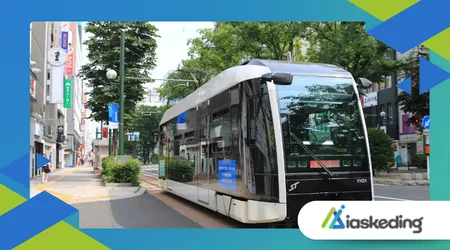
Electric Trolleybuses are redefining urban transit by blending historical reliability with modern battery flexibility to serve neighborhoods that lack traditional overhead infrastructure.
Summary of the Electric Trolleybus Renaissance
- The Evolution of IMC: How In-Motion Charging eliminates the need for 100% wire coverage.
- Operational Flexibility: Why modern systems are thriving in historic and suburban areas.
- Economic Analysis: Comparing the infrastructure costs against standard battery-electric buses.
- Environmental Impact: The reduction of battery waste through grid-connected efficiency.
- Global Adoption: Cities like Prague and Berlin leading the 2026 transit charge.
What are the advantages of modern electric trolleybuses in cities without overhead wires?
Modern Electric Trolleybuses no longer rely on a continuous web of copper cables to navigate a city. By utilizing In-Motion Charging (IMC) technology, these vehicles operate on a hybrid model that maximizes efficiency.
The primary advantage lies in the strategic deployment of wires only on heavy-traffic corridors.
This allows the vehicle to draw power and charge its traction battery simultaneously while moving. When the wires end, the bus continues seamlessly on battery power into unwired zones.
Furthermore, this setup prevents the “range anxiety” often associated with pure battery-electric buses (BEBs).
Because the charging happens during the revenue-earning portion of the trip, there is no need for long layovers at terminal stations for recharging.
Finally, reducing the total length of overhead infrastructure lowers visual pollution and maintenance costs.
Cities can now preserve the aesthetic of historic districts while still providing high-capacity, zero-emission transport that outperforms diesel alternatives.
How does In-Motion Charging work for these hybrid vehicles?
The technical core of Electric Trolleybuses in 2026 is the automated current collector system. Unlike older models requiring manual intervention, these poles connect to the grid with a simple button press.
Electricity flows from the overhead catenary into the electric motor, while a dedicated portion of that energy is diverted to an onboard lithium-ion battery. This process maintains a state of charge that allows for “off-wire” segments of 10 to 15 miles.
| Feature | Standard Battery Bus (BEB) | Modern IMC Trolleybus |
| Charging Method | Stationary (Depot/Terminal) | In-Motion (Under Wires) |
| Battery Weight | Very High (Heavy) | Moderate (Optimized) |
| Operational Hours | Limited by charging time | Continuous 24/7 capability |
| Grid Load | High spikes during stops | Balanced, steady consumption |
| Service Life | 10–12 Years (Battery limited) | 15–20 Years (Traction focus) |
This balanced approach ensures that the vehicle remains lightweight. By carrying a smaller battery than a standard BEB, the Electric Trolleybuses can accommodate more passengers and navigate steep urban inclines with superior torque.
For a deeper dive into how these systems integrate with smart city grids, the International Association of Public Transport (UITP) provides extensive technical documentation on IMC implementation.
Why are cities choosing this over pure battery electric buses?
Transit agencies are discovering that the Total Cost of Ownership (TCO) for Electric Trolleybuses is often more favorable than purchasing a 100% battery-powered fleet.
++ How E-Scooter Fleets Use Swappable Batteries to Reduce Logistics Costs
Standard battery buses require massive investment in depot charging infrastructure. This often leads to “charging bottlenecks” where buses must wait hours to be ready for the next shift, requiring a larger fleet overall.
In contrast, Electric Trolleybuses utilize existing power lines, which often already have the necessary capacity. This allows for a 1:1 replacement ratio with older diesel buses, as the charging is integrated into the route itself.
Moreover, the environmental footprint is significantly lower. Producing large batteries for thousands of buses creates a massive demand for rare-earth minerals; the smaller batteries in IMC systems reduce this impact by over 60%.
Energy efficiency is another critical factor in this comparison.
++ Safety Risks of Low-Voltage EVs (48V Systems)
Direct transmission from wires to the motor avoids the energy losses associated with repeated chemical storage and discharge cycles found in traditional battery buses.
Which global cities are successfully implementing this technology?
Prague has recently made headlines by reintroducing Electric Trolleybuses on lines that were decommissioned decades ago.
Their strategy involves wiring only the hilliest 50% of the route to ensure peak performance.
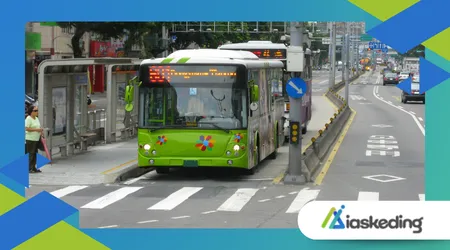
In the United States, cities like San Francisco and Seattle are upgrading their existing networks to IMC standards.
This transition allows them to extend service to new suburban developments without the capital expense of new wires.
European cities like Berlin and Lyon are also evaluating IMC as a way to reach zero-emission targets by 2030. They view this as a more resilient alternative to hydrogen fuel cells.
These projects demonstrate that the technology is scalable and adaptable.
Whether in the freezing winters of Central Europe or the steep hills of the Pacific Northwest, the reliability remains remarkably consistent across different climates.
++ E-Bikes Wear Out Brake Pads Faster Than Traditional Bikes
What is the projected future for electric transport infrastructure?
The global market for Electric Trolleybuses is projected to reach $3.7 billion by the end of 2026. This growth is driven by the need for high-capacity, electrified transit that can be deployed quickly.
We are seeing a shift where “trolleybus” is no longer synonymous with “wired city.” The future belongs to modular infrastructure where wires are seen as charging tools rather than restrictive tracks for the vehicle.
Artificial Intelligence is also playing a role in managing energy consumption.
Modern systems use predictive algorithms to determine exactly when a bus should draw power based on current grid loads and upcoming terrain.
As battery technology continues to improve, the “off-wire” range will likely increase further.
This will eventually allow cities to maintain zero-emission transit with even smaller segments of overhead infrastructure than are required today.
Conclusion
The return of Electric Trolleybuses represents a sophisticated middle ground in the quest for sustainable urban mobility.
By combining the best aspects of grid power and battery storage, cities can enjoy reliable service without total wire dependency.
This technology offers a pragmatic solution to the logistical hurdles of fleet electrification.
It minimizes battery waste, optimizes energy use, and maintains the high-performance standards required for modern metropolitan environments.
As we move deeper into 2026, the resurgence of this “trackless tram” technology proves that the most effective solutions often involve refining proven concepts with cutting-edge innovations. The overhead wire is no longer a leash; it is a power source for the future.
For current updates on global transit trends and electric fleet transitions, visit Sustainable Bus to see the latest performance data from across the industry.
FAQ: Frequently Asked Questions about Electric Trolleybuses
Can an electric trolleybus run if the power goes out?
Yes, modern Electric Trolleybuses equipped with In-Motion Charging have onboard batteries. They can continue to drive for several miles at normal speeds even if the overhead grid loses power temporarily.
Is it expensive to maintain the overhead wires?
While there is an upfront cost, maintaining wires is often more predictable than the lifecycle costs of massive battery replacements. Strategic IMC deployment reduces the total amount of wiring needed by nearly 50%.
Are trolleybuses quieter than regular electric buses?
They are equally quiet as battery-electric buses because they use similar electric motors. The main difference is the lack of engine noise compared to traditional diesel or hybrid-electric transit vehicles.
Can they go around obstacles like accidents or roadwork?
Absolutely. Modern collectors can be lowered automatically from the driver’s seat, allowing Electric Trolleybuses to steer around obstacles using battery power and reconnect to the wires once they are past the blockage.
